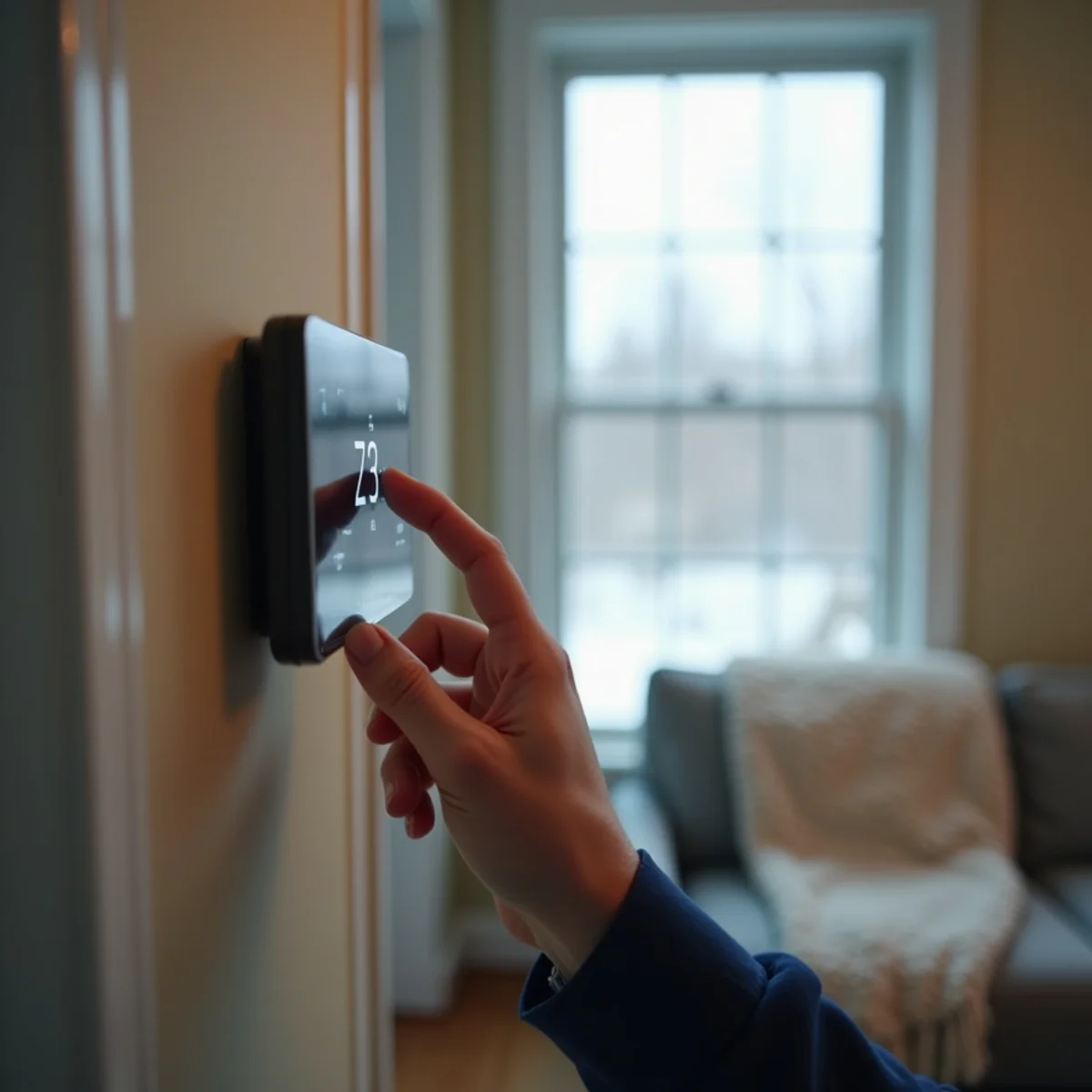
The U.S. Department of Energy's Energy Saver guidance is the commonly cited starting point: about 68 degrees Fahrenheit in winter when you are home and awake, and about 78 degrees in summer when you are home, with the setting moved a few degrees when you are asleep or away. Treat those as a baseline. The right number for your house depends on your comfort, your type of system, and a few cautions covered below.
Those settings are a place to start, not a rule. If 68 feels cold to someone in your house, nudge it up. The point is to pick a steady plan and avoid big, frequent swings.
Winter: Start Near 68
Energy Saver's winter suggestion is about 68 when you are home and awake. Sleeping under blankets, most people are comfortable a few degrees lower. In Upper Bucks, where winters bring real freeze-thaw swings and a lot of older, drafty housing, a lower setting can mean rooms along exterior walls feel cold even when the thermostat in the hall reads fine. Adjust for the coldest room people actually use.
Safety note: never use an oven, grill, or unvented fuel-burning heater to make up for a system that cannot keep up. If you suspect the heat is failing, see our emergency furnace repair page, and if a carbon monoxide alarm sounds, leave and call 911 from outside.
Setbacks: Lowering the Temperature When You Are Out or Asleep
A setback is a scheduled lower temperature in winter, or higher in summer, for periods when you are away or asleep. The guidance commonly cited by Energy Saver describes setbacks of several degrees, often around 7 to 10, for stretches of about eight hours, such as the workday or overnight. Programmable and smart thermostats make this automatic.
- Set the lower temperature to start shortly before you leave or go to bed
- Schedule the return to start a bit before you wake or come home, so the house is comfortable on arrival
- Keep it simple: two or three scheduled changes a day is usually plenty
Setbacks work best with a forced-air furnace. The cautions below cover systems where they do not.
Summer: Start Near 78
Energy Saver's summer suggestion is about 78 when you are home, higher when you are away. Setting it much lower does not cool the house faster. The AC runs at the same rate and just runs longer. Ceiling fans, closed blinds on sun-facing windows, and running the AC before the afternoon peak make 78 feel better. In humid Bucks County summers, comfort is as much about moisture as temperature, which we come back to below. If your AC runs but the air is not cool, see AC running but not cooling.
Heat Pumps: Big Setbacks Can Backfire
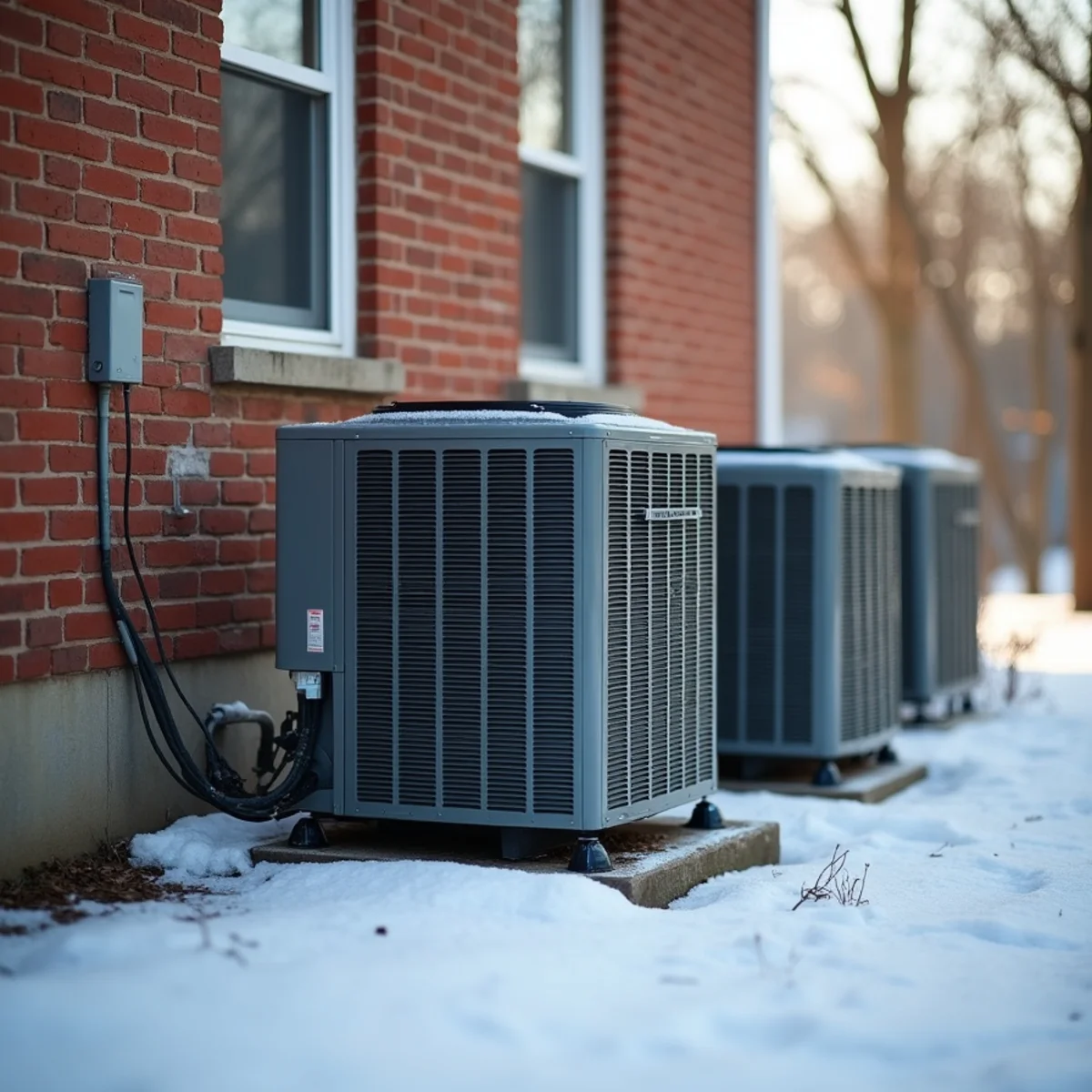
Energy Saver's guidance says programmable thermostats are generally not recommended for heat pumps in heating mode, because a large setback can lead to inefficient operation that cancels out the benefit. The reason is auxiliary heat: when the thermostat calls for a big jump in temperature, the system may bring on electric resistance backup heat to catch up quickly, which costs more to run than the heat pump itself.
In practice, with a heat pump:
- Keep setbacks small, a few degrees at most
- Avoid raising the thermostat several degrees at once
- Consider a thermostat designed for heat pumps that manages recovery
- Know what the auxiliary or emergency heat setting does on your thermostat, and ask your installer when to use it
Heat pump behavior in cold weather, such as defrost, is covered in what is normal in a Bucks County winter. If your system has a gas or oil backup, see dual-fuel heat pump systems, and for service questions our heat pump services page.
Boilers, Radiators, and Radiant Floors
Hot-water radiators, steam systems, and radiant floors respond slowly, sometimes taking hours to bring a cold house back up. A large overnight setback can mean a long recovery, so many owners of these systems use smaller setbacks or none. Steam and radiant systems in particular are sometimes listed among the systems where programmable setbacks are a poor match. If you have an older radiator system, our guide to steam versus hot water boilers helps you know which you have, and boiler repair is there when the heat does not keep up.
Away From Home: Vacations and Frozen-Pipe Safety
When you will be away in cold weather, the American Red Cross commonly advises leaving the heat on and setting the thermostat no lower than 55 degrees, and the Insurance Institute for Business & Home Safety points to 55 as a baseline too. Do not turn the heat off entirely in winter, even for a long trip.
- Set the thermostat to 55 or above, and check the weather forecast before you go
- Open cabinet doors under sinks on exterior walls so warm air reaches pipes
- Ask someone to check on the house during a deep freeze
- If you heat with oil, check the tank level before you leave
More in our frozen pipes guide and, if the worst happens, our frozen pipe and heat outage response service. In summer, set the AC to a higher temperature while away rather than turning it off in a humid house.
Humidity Matters as Much as the Number
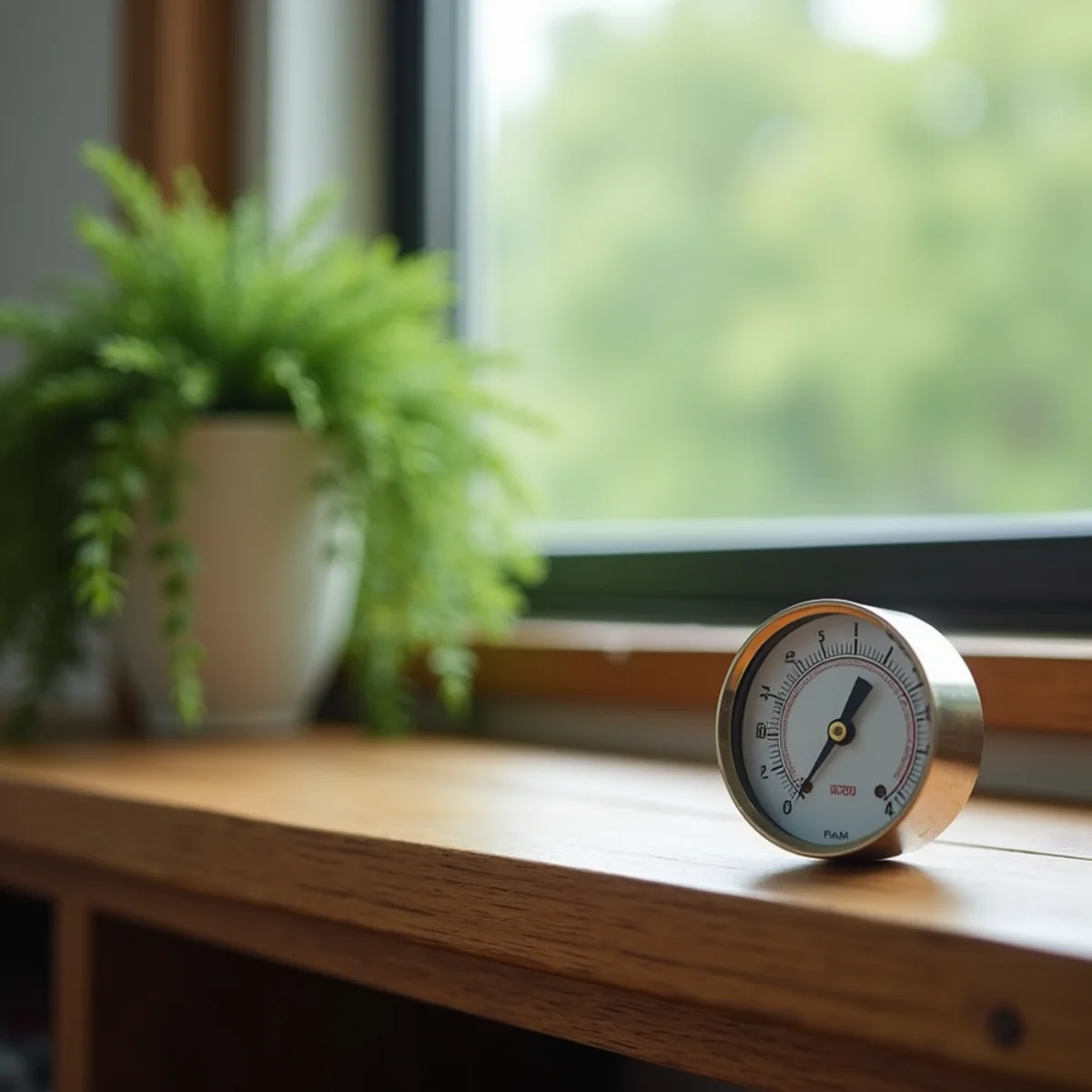
The EPA recommends keeping indoor relative humidity below 60 percent, ideally between 30 and 50 percent, to limit mold growth. In summer, an AC that cycles on and off too fast can cool the air without removing much moisture, and a house can feel clammy at a thermostat reading that should be comfortable. In winter, heated indoor air can get dry. A cheap hygrometer tells you where you stand. If summer humidity stays high, read about whole-home dehumidifiers and our lake humidity guide for Haycock Township.
When the Thermostat Is Not the Problem
If the house will not hold the temperature you set, or the thermostat does not respond, see thermostat not working. Regular HVAC maintenance keeps the system able to hit the number you pick. Call (327) 210-5999 if it cannot.