
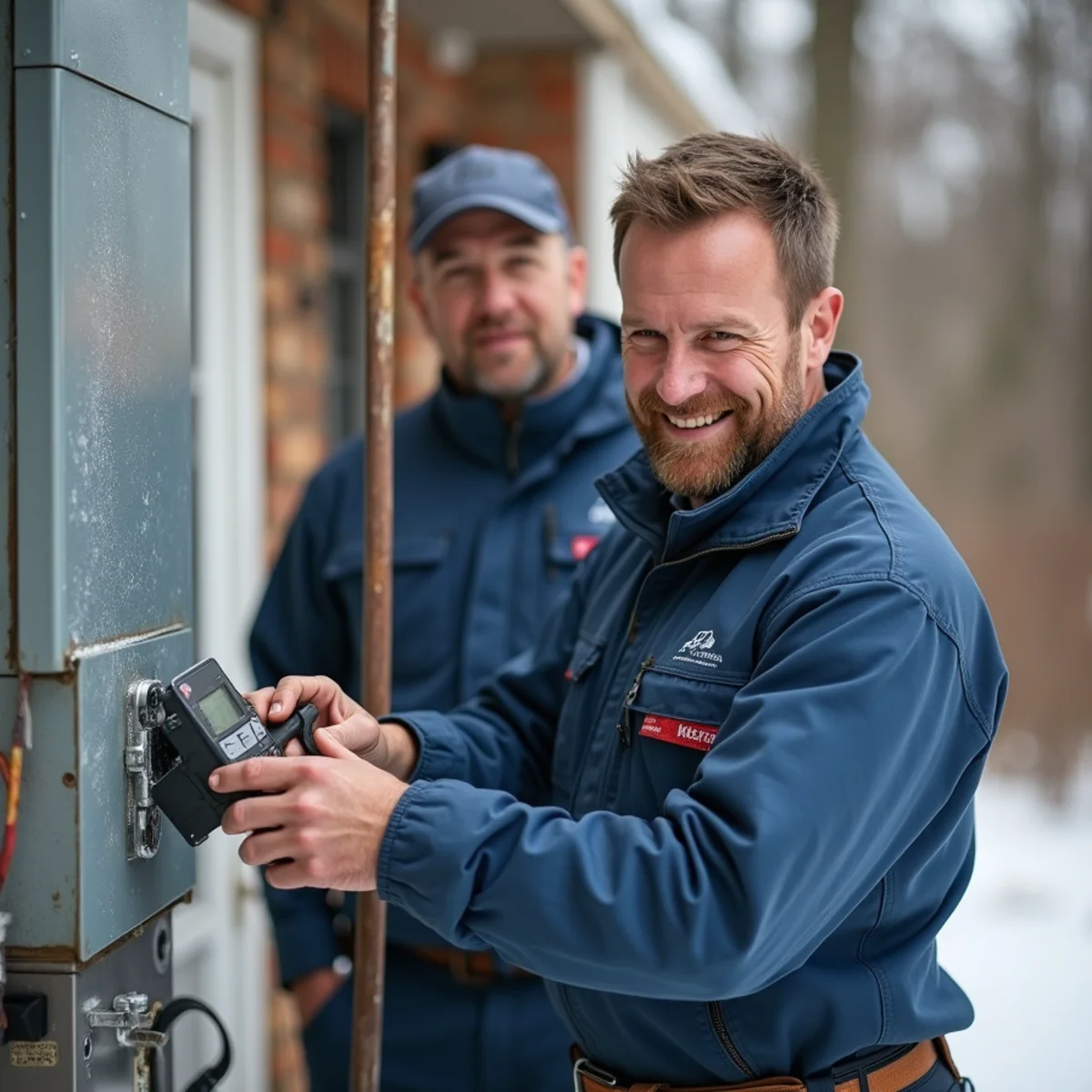
If you've walked outside on a cold, damp January morning and seen your heat pump's outdoor unit puffing steam like it's overheating, and maybe heard it switch to what sounds like the fan running backward — that's defrost mode, and in most cases it's the system working exactly as designed. But there's a difference between a normal, occasional defrost cycle and a unit that's defrosting so often it's barely keeping up.
Why Heat Pumps Frost Up in the First Place
A heat pump pulls heat out of the outdoor air even in cold weather, which means the outdoor coil runs colder than the air around it. When outdoor temperatures sit in that 25 to 40 degree range with any humidity in the air — which describes a lot of our winter days — moisture condenses on the coil and freezes. Defrost mode exists specifically to clear it before that happens.
What a Normal Defrost Cycle Looks Like
During defrost, the system briefly reverses into cooling mode outdoors, which sends warm refrigerant through the outdoor coil to melt the frost. At the same time, the outdoor fan stops turning so the heat isn't just blown away, and you may hear a whooshing sound as the reversing valve switches. Steam or fog around the unit during this process is completely normal. Indoors, you might notice a brief period where the air coming from the vents feels cool rather than warm. A normal cycle lasts somewhere between five and fifteen minutes and happens maybe a few times over the course of a cold, humid day.
Signs the Defrost Cycle Isn't Behaving Normally
- Defrosting every 30 to 45 minutes, especially on days that aren't particularly humid, points to a low refrigerant charge or a failing defrost sensor
- Heavy ice that doesn't fully clear after a defrost cycle, leaving a visible buildup that keeps growing, suggests the defrost control board isn't timing cycles correctly
- No steam or melting at all during what should be a defrost cycle can mean a stuck reversing valve
- A noticeable and prolonged cold-air blast indoors during defrost, rather than a brief dip, often means the backup heat isn't kicking in when it should
How Defrost Interacts With Your Heating Bill
Every defrost cycle borrows energy from somewhere — either a backup electric heat strip or a furnace assist — to keep the house from feeling that brief dip. A system defrosting the normal handful of times a day barely registers on a monthly bill. A system defrosting every half hour is leaning on backup heat far more often than it should, and that backup heat is considerably more expensive to run than the heat pump's normal compressor operation.
What does help is making sure the outdoor unit has clear space around it; packed snow, ice buildup, or debris piled against the coil can throw off airflow and trigger more frequent defrost cycles than the system would otherwise need.
Why Some Days Are Worse Than Others
Not every cold day produces the same defrost pattern. A dry, cold day with low humidity can pass with barely any frost buildup at all, while a milder but damp day right around freezing — exactly the kind of weather Bucks County sees often in late fall and early spring — can trigger far more frequent cycling since there's more moisture in the air available to condense and freeze on the coil. If your system seems to be defrosting constantly, check what the actual weather conditions were before assuming something's wrong; a genuinely unusual pattern on a dry day is a more reliable signal than frequent cycling during a damp thaw.
When Backup Heat Should (and Shouldn't) Be Running
Most heat pump systems are set up to bring in backup heat automatically during a defrost cycle, precisely to offset that brief period where the outdoor unit isn't producing heat. If your system doesn't do this and you're feeling a noticeable cold blast every time it defrosts, that's worth having a technician check the control settings — it may simply need to be configured to engage backup heat during defrost, which is a straightforward fix rather than a sign of equipment failure. On the other hand, backup heat that's running constantly outside of defrost cycles, not just briefly during them, usually points to the heat pump itself struggling to keep up, which is a different and more serious issue.
We handle heat pump services throughout Richland Township and the surrounding area, and defrost complaints are one of the more common winter calls we get. If your system is defrosting unusually often even on dry days, a technician can check refrigerant charge and defrost controls during a maintenance visit to find the actual cause rather than guessing.