If your furnace fires up, runs for three or four minutes, shuts off, and then kicks back on a few minutes later — over and over, all evening — you're dealing with short-cycling. It's more than an annoyance. A furnace that never completes a full heat cycle wears out its ignitor, blower motor, and gas valve far faster than one that runs a normal 10 to 15 minute cycle, and despite all that extra starting and stopping, it usually still can't hold the house at temperature.
Why Freeze-Thaw Swings Make It Worse Here
Quakertown's winter pattern doesn't sit at one cold number for weeks at a time. We'll get a 45-degree afternoon, then drop into the low 20s overnight, sometimes within the same 24 hours. That swing forces a furnace to ramp output up and down constantly instead of settling into a steady rhythm. In a lot of Upper Bucks homes — especially the mid-century forced-air houses built when winters ran a bit milder on average than what we're seeing on the sharpest cold snaps now — the furnace was matched to yesterday's climate assumptions, not today's swings. Short-cycling is often the first symptom that shows up when a system is being asked to do more than it was designed for.
The Usual Suspects Behind Short-Cycling
- A clogged air filter restricting airflow until the high-limit safety switch shuts the burner down early
- A flame sensor coated in a thin layer of carbon that can't hold a signal long enough to keep the cycle going
- A thermostat mounted near a supply vent, a sunny window, or an exterior wall, reading the temperature wrong and shutting things off too soon
- A furnace that's oversized for the house — common when equipment gets swapped without a real load calculation — blasting past the setpoint in a few minutes
- A cracked heat exchanger triggering the limit switch as a genuine safety shutdown, not a nuisance one
What You Can Check Before Calling Anyone
Start with the filter. In freeze-thaw season, road salt and slush track in more dust and debris than usual, and a filter that looked fine in October can be half-blocked by January. Pull it and hold it up to a light — if you can't see much light through it, replace it. Next, look at where your thermostat sits. If it's catching a direct draft from a nearby vent, a leaky window frame, or a stretch of exterior wall that gets unusually cold, it will cycle the system on and off based on a temperature that isn't representative of the room you're actually trying to heat. Check that all your supply and return vents are open and unblocked by furniture, curtains, or rugs, since restricted airflow anywhere in the duct system can trip the same high-limit switch as a dirty filter. Finally, glance at the breaker panel and the furnace's own switch — a loose connection can sometimes mimic a short-cycle pattern. These checks take five minutes and cost nothing.
When It's Time to Call a Professional
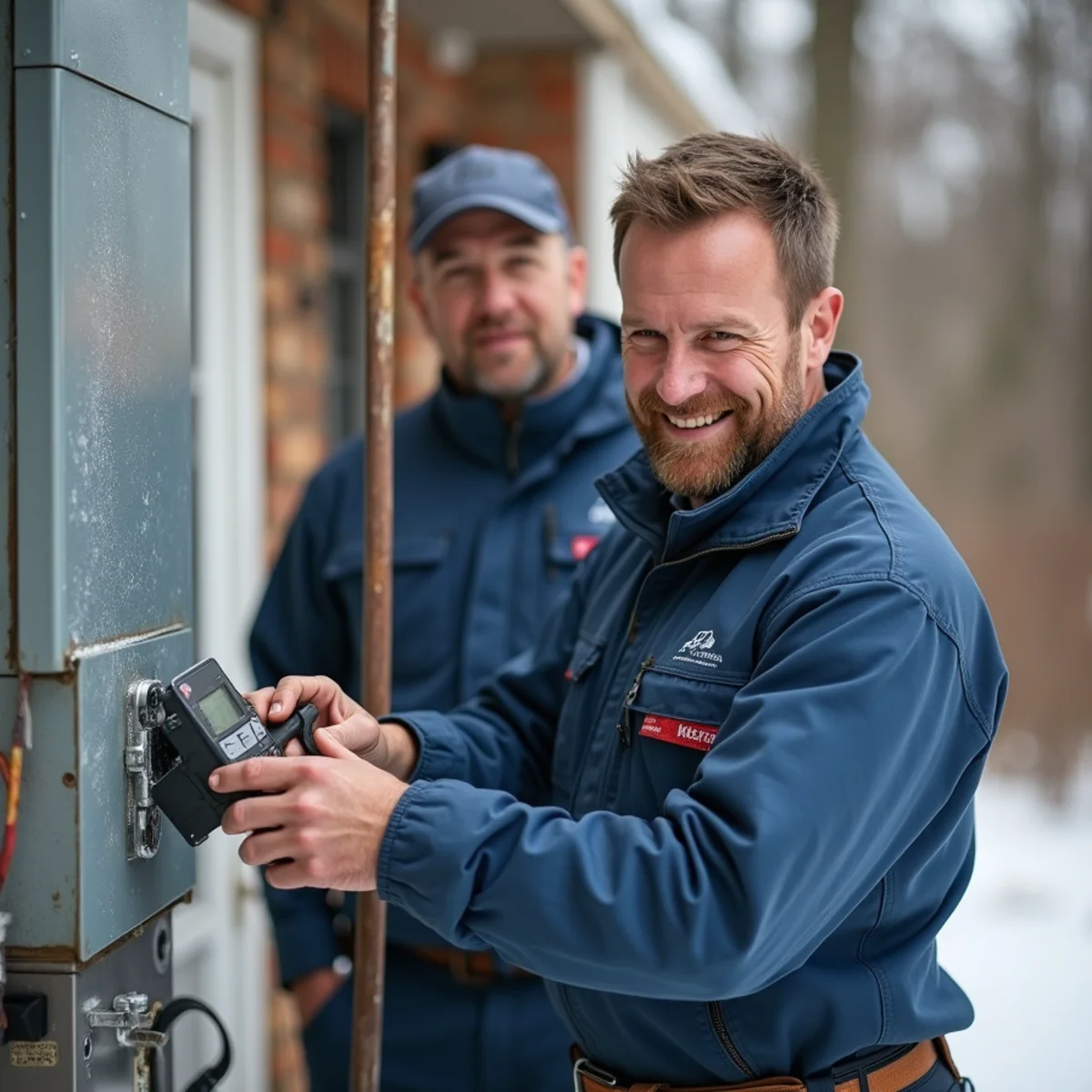
Flame sensor cleaning is simple in concept, but the sensor rod is fragile and sits right next to the igniter, so a heavy-handed attempt at home can crack it or knock it out of position and turn a small problem into a bigger repair. If the filter and thermostat checks don't solve it, a technician's next move is usually a microamp reading on that sensor signal to confirm it's the culprit. A cracked heat exchanger is a different situation entirely — it's a combustion safety issue, not a comfort one, and if it turns up during a furnace repair visit, the unit typically needs to be shut down and replaced rather than patched. If the short-cycling traces back to an oversized furnace from a past installation, the real fix isn't a repair at all — it's a proper load calculation before any new equipment goes in, so the next system is actually sized for your house.
Why Waiting It Out Costs More Than a Diagnostic
It's tempting to just live with a furnace that cycles short, especially if the house is technically staying warm enough. But every extra start-stop cycle puts wear on parts that are expensive to replace — the igniter and blower motor bear the brunt of it, and both take real labor to swap out once they fail outright. A furnace that's already stressed by short-cycling is also the one most likely to quit entirely during the coldest week of the year, which is exactly when a repair costs more and takes longer to schedule.
We've diagnosed short-cycling furnaces in everything from converted farmhouses to 1990s developments across Bucks County, and this freeze-thaw pattern makes the complaint spike every January and February. If your furnace has been cycling short for more than a day or two, don't wait for the coldest week of the year to find out why. A furnace repair diagnostic now is a lot cheaper than an emergency call during a hard freeze. And if the diagnosis points to a genuinely oversized or aging unit rather than a simple fix, ask about furnace installation options sized correctly for your actual house instead of continuing to patch a system that was mismatched from the start.