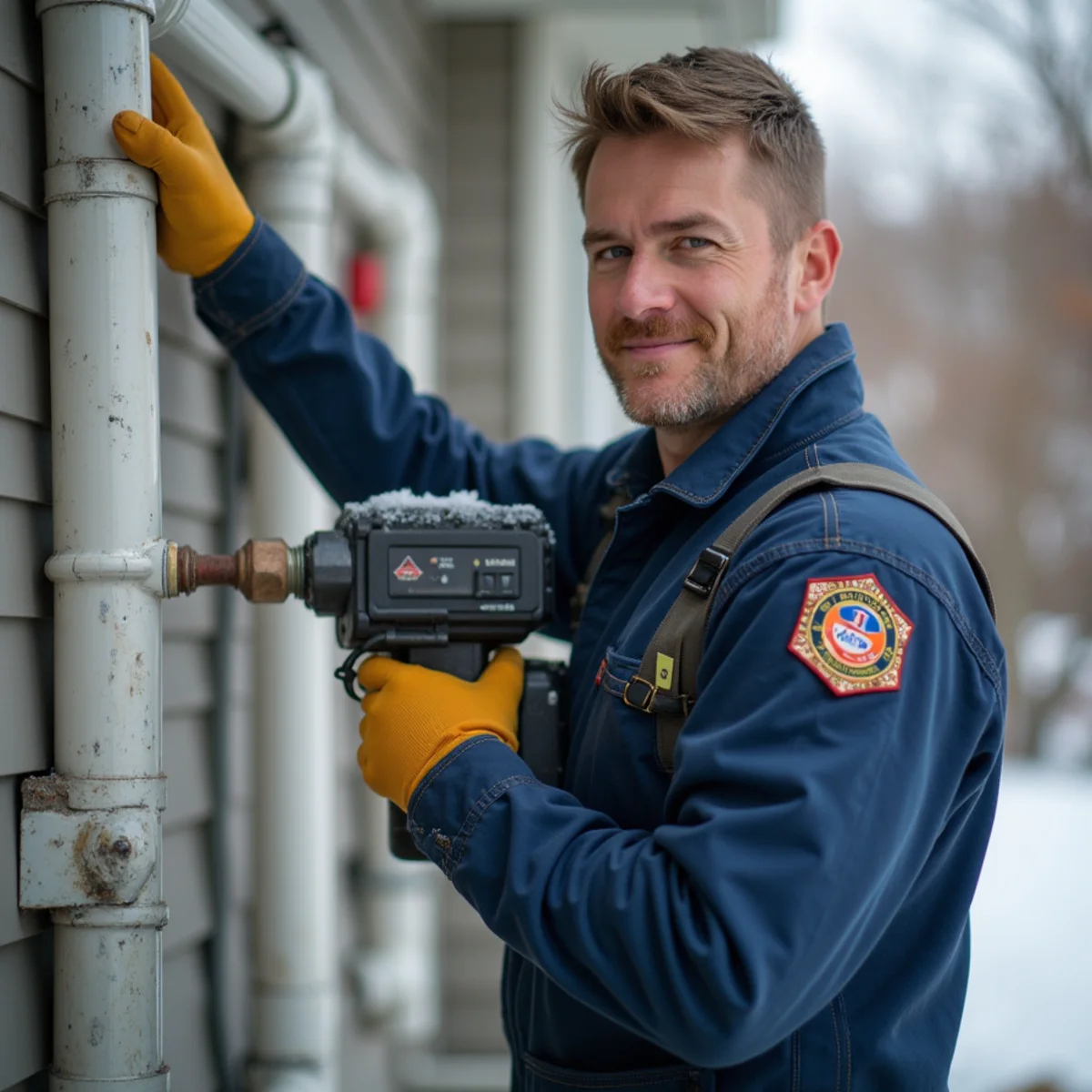
A frozen pipe is rarely its own problem. Almost always, it's a symptom of something else — a heat outage, a closed-off room that never gets warm air, an underinsulated crawlspace, or a furnace that's been quietly underperforming for weeks. Treating the symptom without addressing the cause just means you'll be back here again during the next cold snap. Let's cover both ends: how to keep it from happening, and what to actually do once you've found a frozen line.
Where Pipes Freeze First Around Here
The Licking Run area and similar older Quakertown neighborhoods have a mix of housing stock that makes certain freeze points predictable. Homes with additions built over crawlspaces, pipe runs along uninsulated exterior walls, and older basements with window wells that leak cold air are the usual suspects. If you've lived in your house a few winters, you probably already know which bathroom gets cold first or which hose bib line has given you trouble before — pay closer attention to that spot every time temperatures drop hard.
- Exterior wall plumbing in additions, especially over unheated crawlspaces
- Hose bib supply lines that weren't properly shut off and drained in fall
- Pipes running through unheated garages
- Any line near a foundation vent or crawlspace access that isn't sealed tight
- Kitchen or bathroom plumbing on the north-facing side of the house
Prevention That Actually Works
Insulating pipe sleeves help, but they only slow down freezing, they don't prevent it if the surrounding space gets cold enough for long enough. The real fix is keeping ambient temperature above freezing everywhere pipes run, which usually comes down to sealing air leaks around foundation vents and crawlspace doors, keeping cabinet doors open on exterior-wall plumbing during cold snaps, and letting a thin stream of water drip from faucets fed by vulnerable lines. Disconnect and drain garden hoses every fall, and shut off exterior hose bib valves from inside if your house has them — a lot of Upper Bucks homes built in the mid-century era still have these and homeowners forget they exist.
The Moment You Find a Frozen Pipe
First, don't panic and don't reach for an open flame. Propane torches and pipes do not mix safely, and we see this go wrong more than people expect. Locate the main water shutoff and know where it is before you need it. If a faucet is producing no water at all, or just a trickle, that's your sign. Open the faucet slightly so there's somewhere for water to go once it thaws, and apply gentle heat with a hair dryer, heating pad, or space heater positioned safely away from anything flammable, working from the faucet end back toward the blockage. Never leave a heat source unattended on a pipe.
When It's Bigger Than a Single Faucet
If multiple fixtures are affected, or you can see a bulge, a split, or hear water running inside a wall, stop trying to thaw it yourself. That's a sign the pipe may have already cracked and is waiting to release water the moment it thaws, which turns a plumbing inconvenience into water damage across a floor or ceiling. And if the underlying cause is that your furnace or heat pump isn't keeping the house warm enough to prevent freezing in the first place, the real fix is frozen pipe and heat outage response that addresses both the thaw and the heating failure behind it, rather than just chasing the symptom room by room.
After the Thaw
Once water is flowing again, check every faucet in the house, not just the one that was frozen — a burst section elsewhere can go unnoticed until you turn on an unrelated tap. Look at exposed pipe for any sign of splitting, discoloration, or dampness on nearby drywall and flooring. If your house lost heat entirely to get to this point, get the underlying heating problem diagnosed before the next cold snap rather than treating this as a one-time fluke. For homeowners in the Licking Run corridor specifically, older plumbing runs combined with aging heating equipment tend to produce repeat freeze events in the same spots year after year until the root cause gets fixed.
A Few Minutes Now Saves a Flooded Basement Later
None of this takes long once you know what to look for. Walk your house once a year before the first hard freeze, note where the vulnerable pipes run, and make sure your heating system is actually capable of keeping every corner of the house above freezing, not just the rooms with the thermostat. A furnace that's undersized or aging enough to leave distant rooms cold is doing more damage than a higher heating bill — it's setting up next winter's frozen pipe. If that yearly walkthrough turns up a cold room that never seems to warm up, a fall furnace tune-up before the season starts is the cheapest way to confirm the system can actually keep every corner of the house protected before the next hard freeze arrives.