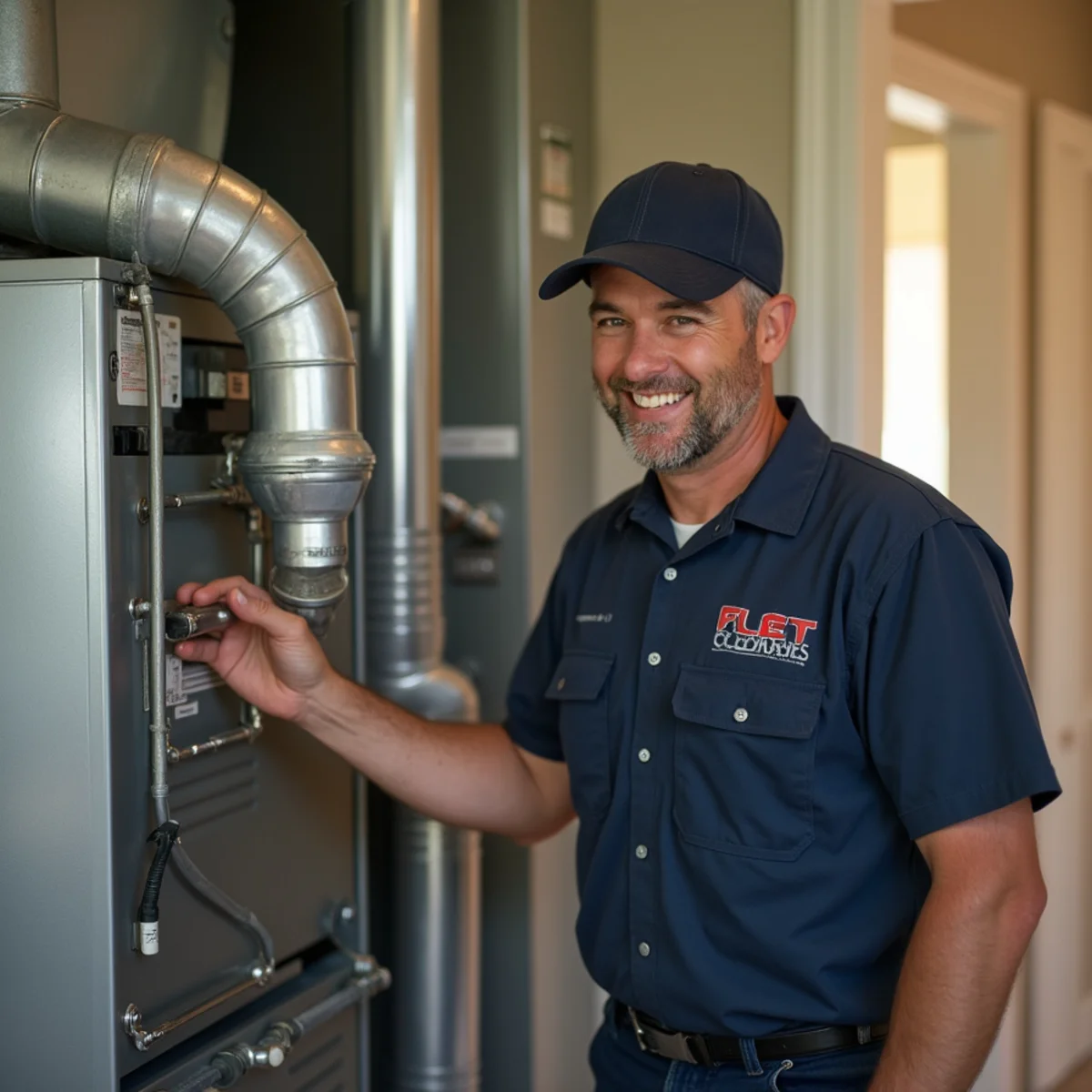

A hard freeze in Upper Bucks County doesn't necessarily have to mean a burst pipe or a dead furnace, but it will absolutely find every single weak point in a home's heating system and its plumbing at once. Winterizing isn't one single task, it's a short list of things worth doing in October and November while it's still 50 degrees out and easy to work on.
The Real Risk Isn't the Cold, It's Losing Heat During the Cold
Pipes don't freeze because a house gets cold once, they freeze because a house stays genuinely cold for hours on end without heat ever reaching that specific pipe run. That's why the two halves of winterizing, the furnace and the plumbing, are really the same project.
Furnace and Heating System Prep
- Schedule a full tune-up and combustion check before temperatures start dropping below freezing overnight
- Replace the filter and confirm return air isn't blocked by anything stored near the unit
- Test the thermostat's programmed setback, a house that drops below 55°F overnight risks frozen pipes even with a working furnace
- Check that carbon monoxide detectors near the furnace and in bedrooms have working batteries
- Locate your furnace's reset switch and breaker now, not during a no-heat call at midnight
- Confirm you know where the emergency shutoff is for both the furnace and the main water supply
A scheduled HVAC maintenance visit in the fall covers most of this list in one trip.
Protecting Pipes Before the First Hard Freeze
- Disconnect and drain outdoor garden hoses, then shut off and drain exterior hose bibs
- Insulate any pipes running through unheated spaces like crawl spaces, garages, or exterior walls with foam pipe sleeves
- Seal drafts around pipe penetrations where lines pass through rim joists or foundation walls
- Know which cabinet doors to open under sinks on exterior walls during a deep cold snap
- Keep a slow drip running from a faucet fed by an at-risk line during the coldest nights of the year
- Locate your main water shutoff valve and confirm it actually turns
Sealing the House Against Heat Loss
- Check weatherstripping around exterior doors and replace it if you can feel a draft with your hand
- Add or replace caulk around window frames, especially on older homes with original wood windows
- Confirm attic insulation hasn't shifted or compressed
- Close foundation vents on crawl spaces once temperatures drop consistently below freezing
- Reverse ceiling fans to run clockwise on low, pushing warm air back down from the ceiling
What to Do If You Lose Heat Anyway
Even a well-maintained furnace can fail on the coldest night of the year. If you lose heat during a hard freeze, open cabinet doors under sinks on exterior walls immediately, let faucets on those lines drip, and call for emergency frozen pipe and heat outage service rather than waiting to see if the problem resolves on its own. Pipes can freeze in as little as six to eight hours once indoor temperatures drop near freezing.
A Bucks County Winterizing Timeline
Across Bucks County, the safest rule of thumb is to have furnace prep and pipe protection finished before Halloween, since the first hard freeze of the season has landed as early as the first week of November in recent years.
Why Older Quakertown Homes Need Extra Attention
A house with original wood windows, an uninsulated crawlspace addition, or knob-and-tube-era wiring near heating equipment needs a more thorough winterizing pass than a newer, tighter build. These older homes often have plumbing runs that were added decades after the original construction, sometimes routed through spaces that were never actually intended to stay warm, which is exactly why the same freeze-thaw swing that a newer home shrugs off entirely can catch an older property completely off guard. If you've never mapped out where your home's most vulnerable pipe runs actually are, walking the entire house once with a flashlight before the season starts is well worth the twenty minutes or so it genuinely takes.
What a Pre-Winter Whole-Home Walkthrough Catches
Beyond the furnace and the obvious pipe locations, a full walkthrough looks at things that are easy to overlook: whether the garage door seals properly if plumbing runs through it, whether an addition's crawlspace access panel is actually closed and insulated, and whether a previous winter's ice damming left any gaps in roof or soffit venting that let cold air infiltrate an attic space above living areas. None of these show up on a typical furnace-and-pipes checklist, but they're exactly the kind of overlooked details that separate a house that sails through a hard freeze without incident from one that finds a brand new weak point every single year.