Quakertown gets its first real cold snap sometime in October, usually right after a stretch of warm afternoons that lull people into thinking they have more time. A furnace that sat idle since March doesn't like being asked to fire on the coldest night of the year without a look-over first. A fall tune-up isn't about selling you something, it's about catching a cracked heat exchanger, a clogged flue, or a worn igniter while there's still time to fix it on your schedule instead of at 11 PM in January.
Why Fall Is the Right Time to Get Ahead of It
Furnaces fail during their first hard run of the season, not in the dead of winter. The startup after months of sitting idle is when a weak capacitor, a dirty flame sensor, or a slipping belt finally gives out. Scheduling a tune-up in September or October means you're dealing with a technician who has time to diagnose a problem properly, order a part if needed, and get it installed before you actually need the heat around the clock.
What a Real Furnace Tune-Up Covers
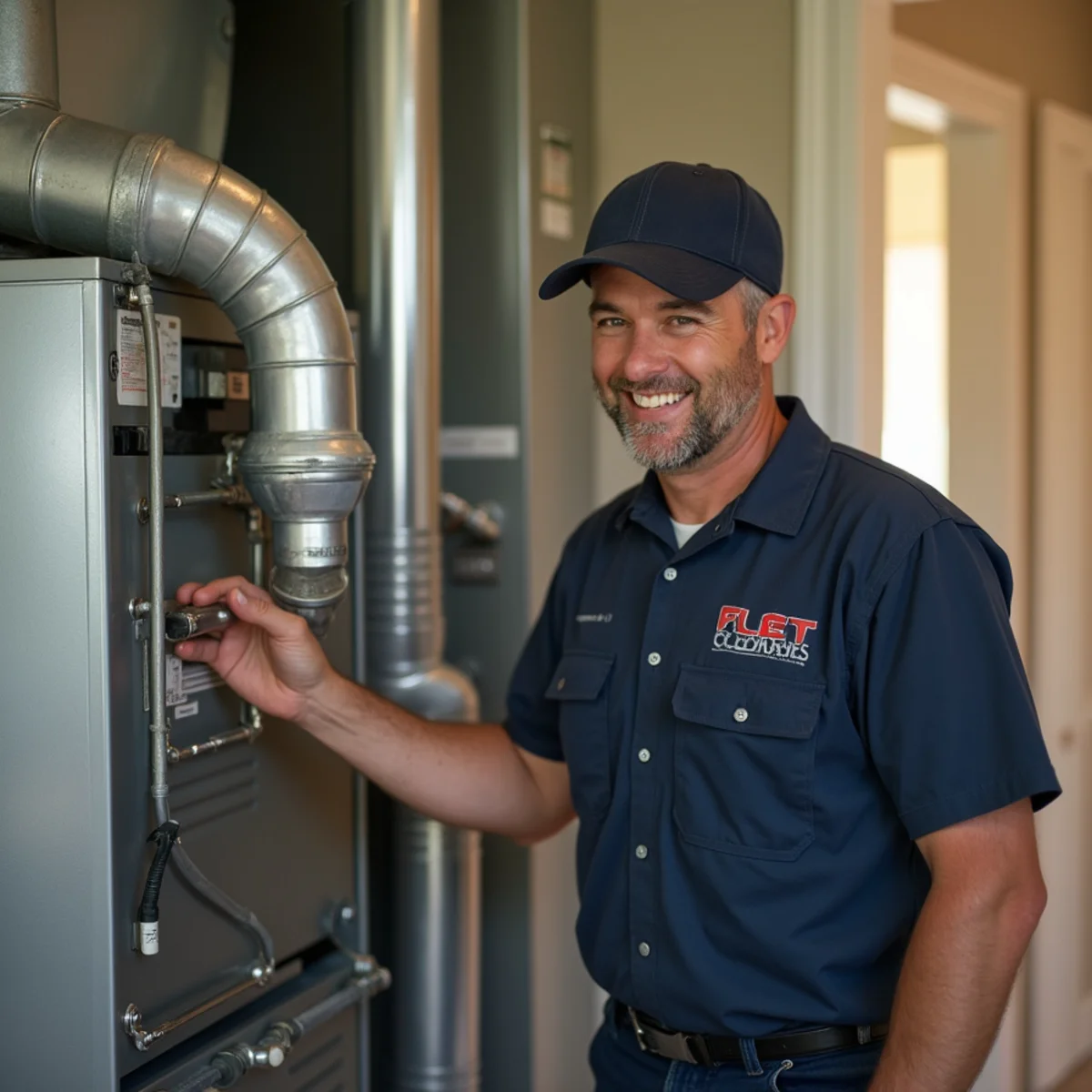
A tune-up worth paying for goes well past a filter swap. Here's what should actually happen during the visit:
- Combustion analysis to check the burner flame and confirm carbon monoxide is within safe limits
- Heat exchanger inspection for cracks or corrosion that could let exhaust gas mix with breathing air
- Igniter or pilot assembly check, since this is the most common no-heat call we get
- Blower motor and belt inspection, including amp draw testing
- Thermostat calibration and a check that heating and cooling modes both respond correctly
- Filter replacement or cleaning, plus a look at return air flow
- Flue and venting inspection for blockages, especially after summer nesting season
- Gas pressure and connection check on gas-fired units, or electrical connection torque check on electric furnaces
- Condensate drain clearing on high-efficiency furnaces to prevent shutdowns from a clogged line
This is the same scope of work included in scheduled HVAC maintenance visits we run for homes throughout the region, and it's worth doing every fall regardless of the age of your equipment.
Homeowner Checks You Can Do Yourself This Weekend
Before the technician ever shows up, there's a short list you can knock out on your own:
- Vacuum dust and pet hair away from the return air grille and supply vents
- Check that nothing is stacked against the furnace or blocking combustion air openings
- Look at the exterior flue termination for bird nests, leaves, or ice damming left from last winter
- Test your thermostat batteries if it isn't hardwired
- Walk your basement or utility closet and note anything unusual, a musty or metallic smell often means trouble
- Replace a standard 1-inch filter now if you haven't since summer
Older Quakertown Homes Need a Second Look
Upper Bucks County has a genuine mix of housing stock, and the tune-up looks different depending on what you own. Homes with an old boiler or steam radiators need the water level checked, the low-water cutoff tested, and every radiator bled before the season's first cold night. Mid-century forced-air homes often have ductwork that was never actually sized against a Manual J or Manual D calculation, it was just run wherever it fit. We see this pattern across Bucks County in homes built between roughly 1950 and 1975, and it's usually fixable without tearing out walls. Newer construction with heat pumps and dual-fuel systems needs its own checks, including defrost cycle testing and a look at the backup heat source that kicks in below freezing.
Signs Your Furnace Won't Make It Through Winter Without Help
- Short-cycling, where the furnace turns on and off every few minutes
- Cold spots in rooms that used to heat fine
- A burner flame that looks yellow or orange instead of steady blue
- Rattling, banging, or a burning-dust smell that doesn't fade after a few minutes of runtime
- A gas or electric bill that jumped without a corresponding jump in usage
Booking Your Tune-Up Before the Rush
October fills up fast once the first real cold snap hits. Most contractors, us included, see call volume triple in the first cold week of the season. If your furnace hasn't been looked at since last winter, get it on the schedule now while there's flexibility in appointment times and no ice on anyone's driveway.
What Happens If the Tune-Up Turns Up a Real Problem
Finding an issue during a fall tune-up isn't a bad outcome — it's the entire point of scheduling one before you actually need the heat. If a technician flags something like a cracked heat exchanger or a failing igniter, you're in a much better position to get it addressed calmly, compare options, and schedule the repair on your timeline than you would be during an actual no-heat emergency in January. If the diagnosis points toward a system that's aging out entirely rather than a single fixable component, our furnace repair team can walk you through whether another repair still makes sense or whether it's time to start planning for replacement.