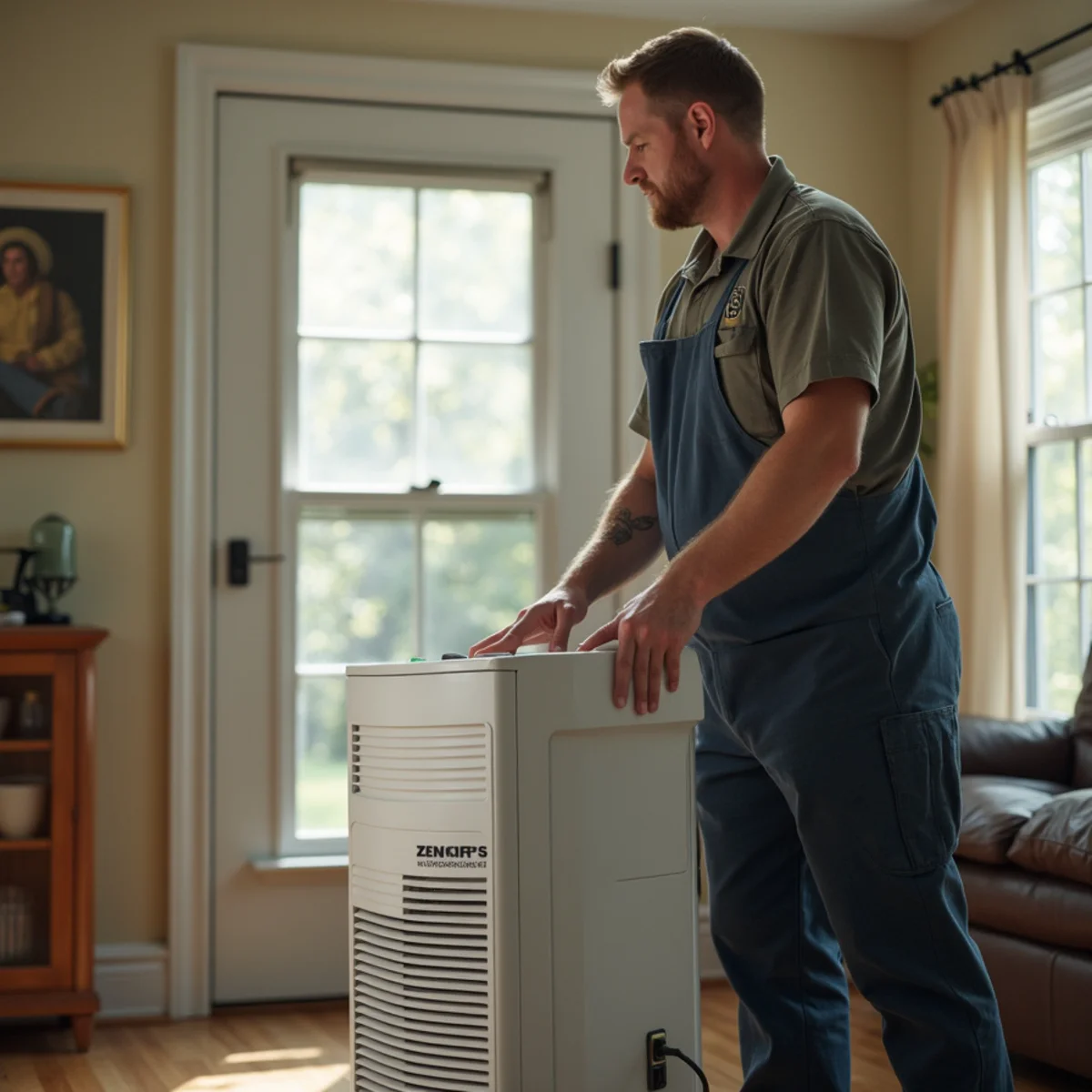

Quakertown's summers don't just get hot, they get heavy. Average humidity here runs around 67% through July and August, which means an air conditioner that's low on refrigerant or dragging a dirty coil doesn't just cool poorly, it leaves the air feeling damp and sticky even when the thermostat says 72. A spring tune-up is how you catch that before the first heat wave, not during it.
Why Spring, Not July, Is When You Want This Done
Every AC we service worked hard last September and then sat untouched all winter and spring. Capacitors weaken sitting idle, condenser coils collect a winter's worth of dust and cottonwood fluff, and small refrigerant leaks that started last summer are bigger by now. Running the system through a full tune-up in April or May means any problem gets caught before the first 90-degree day.
What Happens During a Proper AC Tune-Up
A real tune-up covers the whole system, not just a quick look at the outdoor unit:
- Refrigerant charge check against manufacturer specs, using superheat and subcooling readings rather than just topping off
- Condenser coil cleaning to remove dust, grass clippings, and cottonwood fluff that block airflow
- Evaporator coil inspection for dirt buildup or signs of a slow leak
- Electrical component testing, including capacitors, contactors, and wiring connections
- Condensate drain line flush to prevent the summer's most common failure, an overflow shutoff tripped by algae buildup
- Blower motor and airflow check to confirm the system is actually moving the CFM it was designed for
- Thermostat function check across cooling modes and any smart scheduling features
- Ductwork inspection for obvious leaks or disconnected runs in accessible areas
This is the exact scope covered in our seasonal HVAC maintenance visits, and if anything comes up that needs more than a tune-up, it gets flagged and handled as an AC repair rather than patched over and left to fail mid-summer.
The Humidity Problem Nobody Talks About Enough
Cooling and dehumidifying are two different jobs, and a properly sized, properly maintained AC does both at once. When a system is oversized for the home, or when refrigerant charge is off, it cools the air fast enough to satisfy the thermostat without running long enough to pull real moisture out of it. The result is a house that reads 72 degrees and still feels clammy. Correct sizing against ACCA Manual J, matched with Manual S equipment selection, is what prevents this in a new install.
Quick Checks You Can Run Before Calling Anyone
- Clear leaves, grass clippings, and mulch away from the outdoor condenser unit, leaving at least two feet of clearance
- Replace or clean the filter, since a clogged filter is still the single most common cause of weak airflow
- Check that the condensate line isn't dripping steadily or backed up near the indoor unit
- Confirm outdoor and indoor breakers haven't tripped over the winter
- Look at the outdoor unit's fan blades for a bent blade or a fan that wobbles when it starts
When a Tune-Up Turns Into a Repair Call
Sometimes a scheduled tune-up turns up something that can't just be cleaned or adjusted. A compressor pulling high amps, a coil that's leaking refrigerant, or a blower motor with worn bearings all need real repair, not a tune-up line item. The upside of catching these in spring is choice: you can decide on a repair timeline instead of living without cooling during a heat advisory.
Getting Ahead of Hilltown Township's Cooling Season
Homes in Hilltown Township run the same mix of older systems and newer installs as the rest of Upper Bucks, and the same rule applies everywhere: get the tune-up done before the first stretch of 85-degree days, not after.
Why Superheat and Subcooling Readings Matter More Than a Gauge Glance
A lot of the difference between a thorough tune-up and a rushed one comes down to how refrigerant charge actually gets verified. Simply checking pressure on a gauge and topping off if it looks low can mask an underlying leak and doesn't confirm the system is actually charged to the manufacturer's specification. Superheat and subcooling calculations, which factor in both pressure and temperature at specific points in the refrigerant circuit, give a far more precise picture of whether the charge is correct — and catching a slow leak this way, rather than just topping off refrigerant every spring, is what actually solves the underlying problem instead of masking it for another season.
What an Aging System Nearing Replacement Looks Like at Tune-Up Time
Not every tune-up ends with a clean bill of health, and that's useful information even when it's not what you want to hear. A technician who notices a compressor running hotter than it should, refrigerant that needs topping off two years running, or a system that's simply old enough that R-22 or discontinued parts are becoming hard to source is doing you a favor by raising it now, in spring, rather than letting you find out mid-summer when the unit finally quits. If your system is approaching that point, our AC installation team can walk you through replacement options well ahead of the season you'd actually need them.