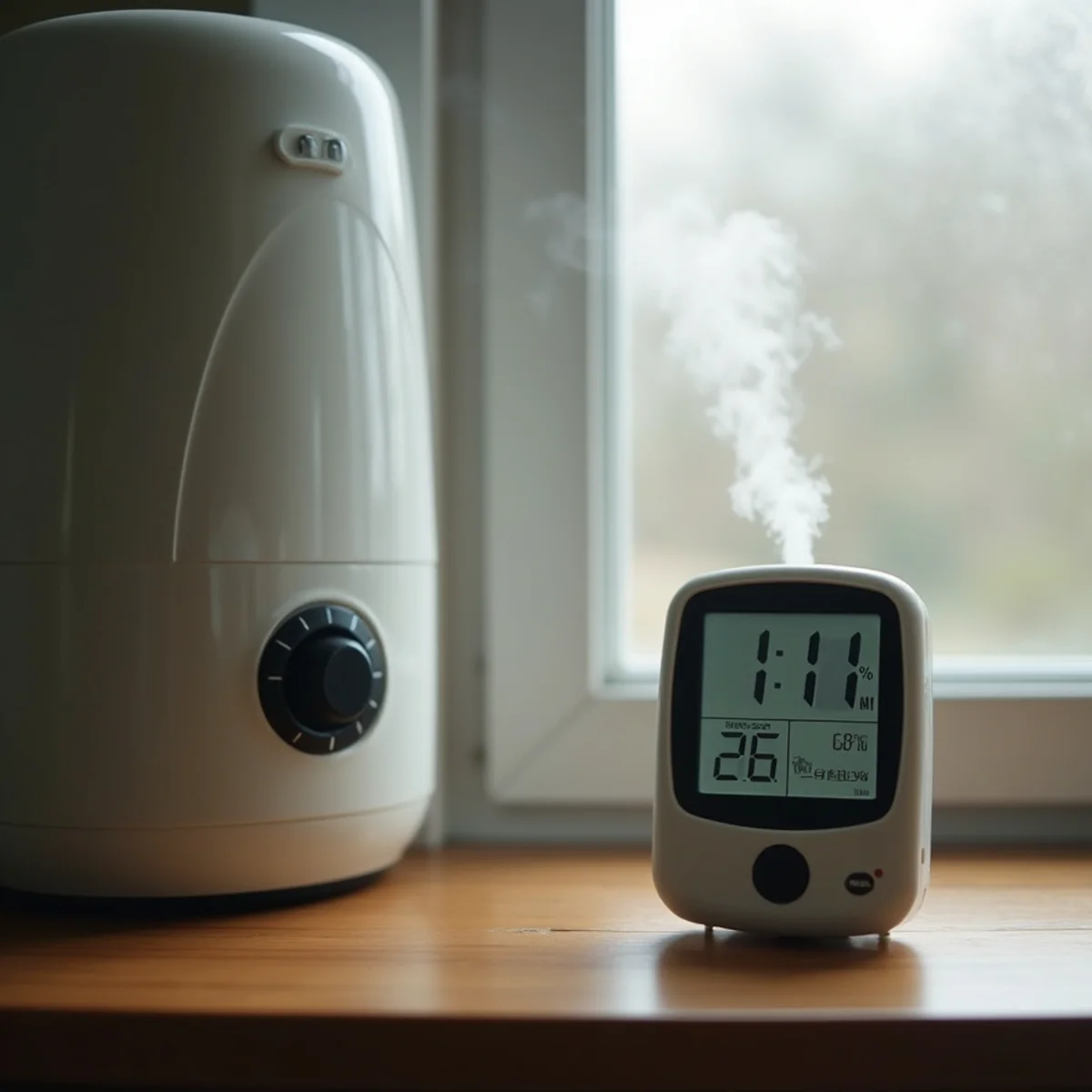
The short answer: you need a humidifier if the air in your home is too dry, and a dehumidifier if it is too damp. The way to tell which is neither guesswork nor a feeling, but a cheap hygrometer. The EPA says indoor relative humidity should be kept below 60 percent, ideally between 30 and 50 percent. Measure first, then buy or install the machine that matches your reading.
Measure Before You Buy
A hygrometer is a small gauge that shows relative humidity, and basic models are sold at hardware stores. Place one in the main living area and another in the basement or wherever you suspect damp air. Check them at different times of day and across seasons, since humidity swings with the weather and with how much cooking, showering and laundry the house does.
If you read below about 30 percent in winter, the air is dry. If you read above 50 to 60 percent in summer, or you see condensation on windows in cold weather, the air is damp. Anything in between is usually fine, and adding a machine would be spending money you do not need to spend.
When You Need a Humidifier
Winter air outdoors holds very little moisture, and a forced-air furnace dries it further as it heats the house. Dry air tends to show up as static shocks, dry skin and sore throats, cracks in wood furniture or floors, and gaps opening at trim. If you see those signs and the hygrometer reads low, a humidifier makes sense.
- Portable humidifiers suit one room, such as a bedroom, and cost little up front, but they need daily attention
- Whole-home humidifiers connect to the furnace or ductwork and a water line, and treat the whole house with less daily work
Whichever kind you choose, do not overdo it. Too much humidity in winter pushes moisture into cold walls and windows, where it condenses and feeds mold. If windows are fogging heavily or dripping, turn the humidity down.
The EPA's guidance on portable humidifiers is to use the type of water the manufacturer recommends, often distilled, and to empty, dry and clean the tank on a regular schedule, because stale water can grow bacteria and mold that get blown into the room. Follow the manual's cleaning steps, and unplug the unit before you touch it.
When You Need a Dehumidifier
Humid summers around Quakertown, especially near water like Lake Nockamixon, push indoor humidity up. High humidity makes a house feel clammy, smells musty, and supports mold and dust mites. Basements, which are cool and often below grade, are the most common problem spot. Signs include a damp smell, water stains on walls, condensation on cold pipes, and white mineral deposits on masonry.
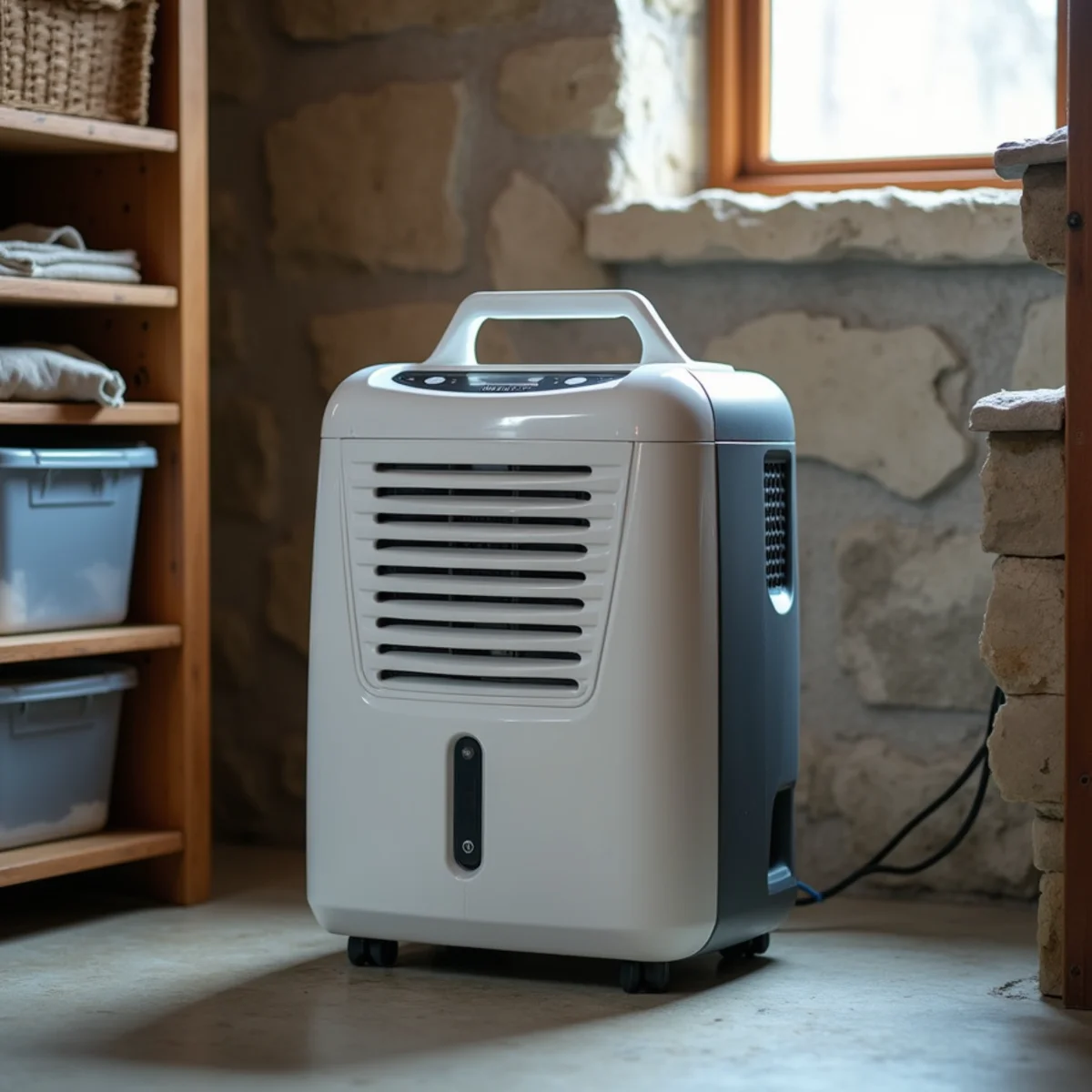
A portable dehumidifier can handle a single damp basement or room if the tank or hose is emptied regularly. If the whole house feels muggy, or you are running two or three units and emptying buckets every day, a ducted system that treats the whole house is worth considering. Our guide on whole-home dehumidifiers explains when that makes sense, and our whole-home dehumidifier installation page covers how one is installed.
Your Air Conditioner Is Already a Dehumidifier
An air conditioner removes moisture as it cools. That is why an oversized AC that cools quickly and shuts off can leave the house cold and clammy: it never runs long enough to pull the water out. If your upstairs is damp even though the AC is running, sizing, airflow or a dirty coil may be the cause. Our AC maintenance service checks the coil and drain, and our article on humidity and AC performance goes deeper.
When It Is Not a Machine Problem
A dehumidifier treats symptoms. If water is coming into the house, the machine will run constantly and the problem will persist. Before buying one for a wet basement, look for the source:
- Gutters that are clogged, undersized, or dumping water at the foundation
- Downspouts that end right beside the wall instead of several feet away
- Soil that slopes toward the house
- Plumbing leaks, a sweating cold-water line, or a failed sump pump
- A clothes dryer venting into the house
- A bathroom or kitchen fan that vents into the attic or does not vent at all
- Wet crawlspace soil with no ground cover
The EPA's mold guidance is clear that controlling moisture is how you control mold, and that wet materials should be dried within a day or two. If you see actual mold growth on surfaces, handle it according to the EPA's guidance for the size of the area, and consider calling a remediation professional for larger problems. A machine will not remove existing mold.
How Heating and Cooling Equipment Fits In
Your HVAC system affects humidity in both directions. A furnace dries the air. A bypass humidifier or a steam humidifier on the system can add moisture back, and our indoor air quality team can advise on what fits your setup. Keep in mind that fuel-burning equipment needs combustion air and proper venting; do not seal a house so tightly or run exhaust fans so hard that you pull exhaust back down a flue. If you smell gas or a carbon monoxide alarm sounds, leave the house and call 911. Our guide on carbon monoxide detector placement covers where alarms belong.
Choosing and Next Steps
Start with the hygrometer, spend a week or two collecting readings, and then decide. Fix leaks and drainage first, use a portable unit for a single problem room, and consider a whole-home option if the whole house is consistently out of range. If you want help working out which makes sense, call our indoor air quality team, and use our furnace tune-up visit to have the humidifier on your furnace cleaned and checked before winter.