If your house sits anywhere near the low ground along Licking Run, you've probably already noticed your yard behaves quite differently than a neighbor's up on higher ground just a half-mile away. It stays wet noticeably longer, it drains slower after any rain, and in winter it freezes and thaws on a schedule entirely of its own instead of following the general regional weather pattern everyone else experiences. That same distinctive ground behavior is hard on whatever outdoor HVAC equipment happens to be sitting directly on top of it.
Why the Licking Run Corridor Freezes and Thaws More Than Other Parts of Town
Low-lying ground near a stream corridor holds meaningfully more moisture in the soil than higher, better-drained lots elsewhere in Quakertown. That extra moisture means the ground freezes considerably harder when temperatures drop and then turns to standing water or soft mud the moment things warm back up, sometimes within the very same 24-hour period during a typical Pennsylvania winter thaw cycle.
What Freeze-Thaw Cycling Does to an Outdoor Unit
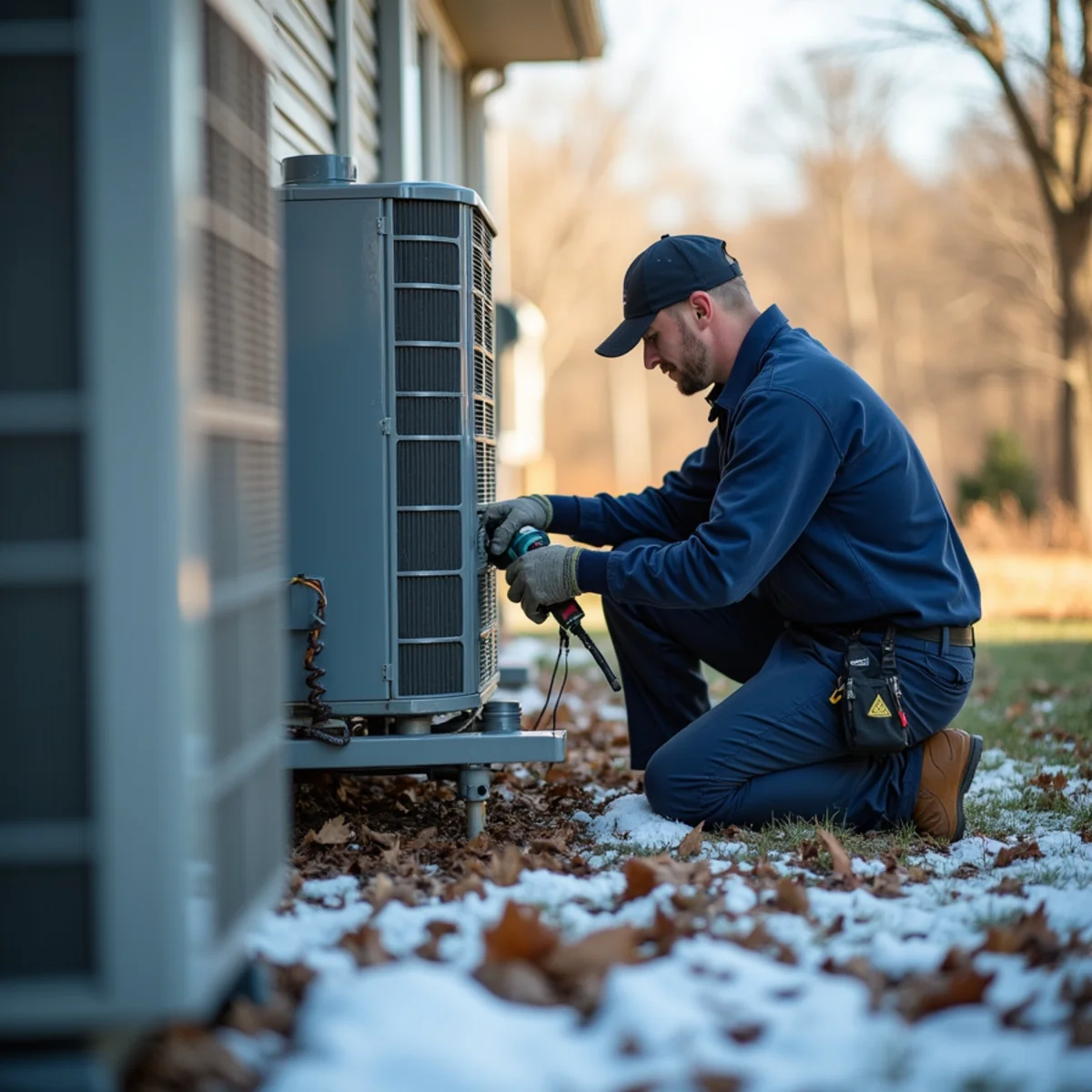
An outdoor condenser or heat pump unit is designed to sit perfectly level on a genuinely stable pad. When the ground underneath repeatedly freezes, expands, thaws, and settles over and over, that pad can gradually shift, tilt, or sink unevenly over the course of a season or two. A unit that's no longer sitting level puts uneven, ongoing stress directly on the compressor mounts and can cause condensate or defrost water to pool against the cabinet instead of properly draining away, which then leads to real ice buildup around the base.
Heat Pumps Are Especially Exposed
Standard air conditioners only run during warm weather, so they mostly sit dormant through the freeze-thaw season without much added stress. Heat pumps don't get that same break — they run all winter long, cycling through defrost mode regularly and repeatedly, which means they're actively producing water at the coil during the exact same months when the ground around them is going through its own freeze-thaw routine. Regular heat pump services during the winter months catches pad and drainage issues before they turn into a compressor problem.
Simple Protection That Actually Works
- A properly sized, level composite or poured pad resists frost heave far better than a unit set directly on grade or on top of a cracked older pad
- Grading the ground around the unit so water runs away from the pad instead of pooling against it makes a much bigger difference than people expect
- Raising the unit up a few inches on riser feet keeps the coil and base above standing meltwater during a thaw
- Clearing leaves and debris away from the base each fall keeps drainage paths open once winter drainage gets sluggish
Signs Your Outdoor Unit Already Took Damage
A unit that's visibly tilted, sitting in standing water after a thaw, or building unusual amounts of ice around its base is worth having looked at before the next hard freeze. Homes along the Licking Run corridor see this pattern often enough that we check pad condition and drainage as a standard part of any winter heat pump visit in that part of town.
Why Composite Pads Outperform Concrete in This Specific Ground
Traditional poured concrete pads can actually work against you in soil that goes through repeated freeze-thaw cycling, since concrete itself can crack under the same expansion and contraction forces acting on the ground beneath it. A composite pad, designed with some flexibility built in, tends to handle that repeated movement better over multiple seasons than a rigid concrete slab that eventually develops its own cracks and settling issues. This is a detail worth raising specifically with an installer working on a property near Licking Run, since a standard pad recommendation that works fine on higher, better-drained ground elsewhere in Quakertown may not hold up the same way here.
The Compressor Damage That Develops Slowly Over Seasons
The real risk with a gradually settling or tilting pad isn't usually a dramatic single failure — it's slow, cumulative wear on the compressor mounts and refrigerant line connections that builds up quietly over several seasons before it shows up as a performance problem or a leak. By the time a homeowner notices reduced heating or cooling output, the underlying pad issue may have been developing for a year or more. That's part of why including a pad-and-drainage check in your regular maintenance visit, even on a unit that seems to be running fine, catches problems while they're still a simple leveling fix rather than a compressor or refrigerant line repair.