
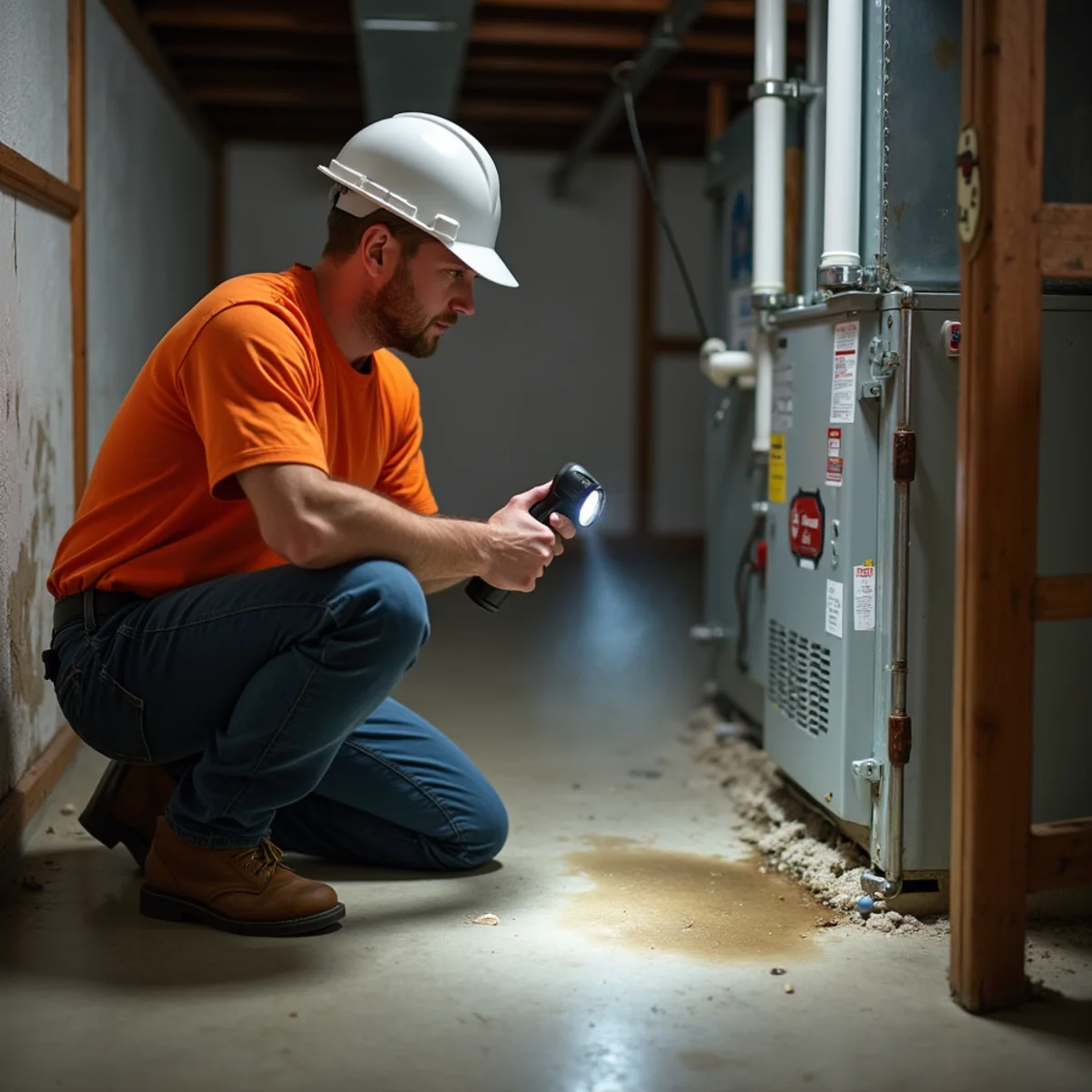
If your air conditioner is leaking water inside the house, turn it off at the thermostat first, then deal with the water. The cause is most often a clogged condensate drain line. A frozen evaporator coil, a cracked drain pan, a dirty filter, or a failed float switch can also produce a puddle. Running the system while it leaks adds to the damage, so stop the cooling, soak up the water, and work through the checks below.
What to Do Right Now
Set the thermostat to Off so the AC stops making more condensate. If water is near the unit and you can reach the breaker or disconnect without stepping in water, turn the system off there too. Never touch electrical equipment while standing in water. If the water is spreading toward outlets, the panel, or any wiring, stay out of it and call for help.
Then limit the damage. Put towels or a wet/dry vacuum on the water, set a bucket under any drip, and move stored items off the floor. Take a photo for your records. If water has soaked drywall, insulation or ceiling material, it can stain and grow mold in a short time, so dry it quickly and mention it when you call.
Where the Water Comes From
Cooling your home also removes humidity. Warm, damp air passes over the cold evaporator coil, and the moisture condenses into water. It drips into a drain pan and runs out through a drain line to a drain, floor sink or outdoors. On a humid Bucks County summer day, a system can produce a surprising amount of water, which is why a small blockage shows up quickly.
So there are really only a few ways for water to end up on the floor:
- The drain line is blocked, so the pan fills and spills over
- The pan itself is cracked, rusted, or not level
- The coil has frozen and then thawed faster than the pan can handle
- A safety switch or condensate pump failed and did not shut the system off
A Clogged Condensate Drain Line
This is the usual culprit. Algae, slime, dust and debris build up inside the drain line over a season and eventually block it. The water has nowhere to go and backs up into the pan. In attics and closets, that means a stained ceiling or wet floor. In basements, you may find a puddle by the furnace or air handler.
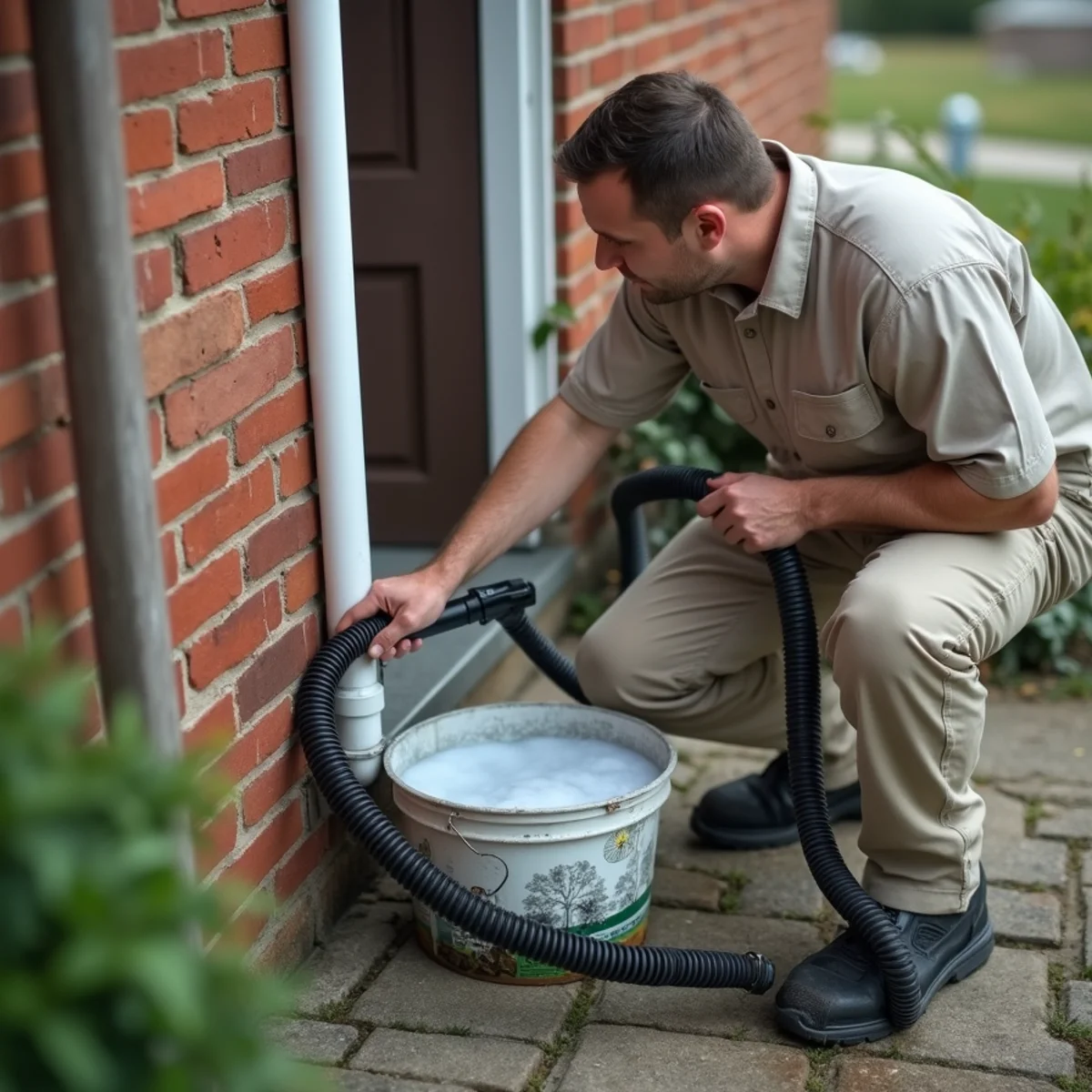
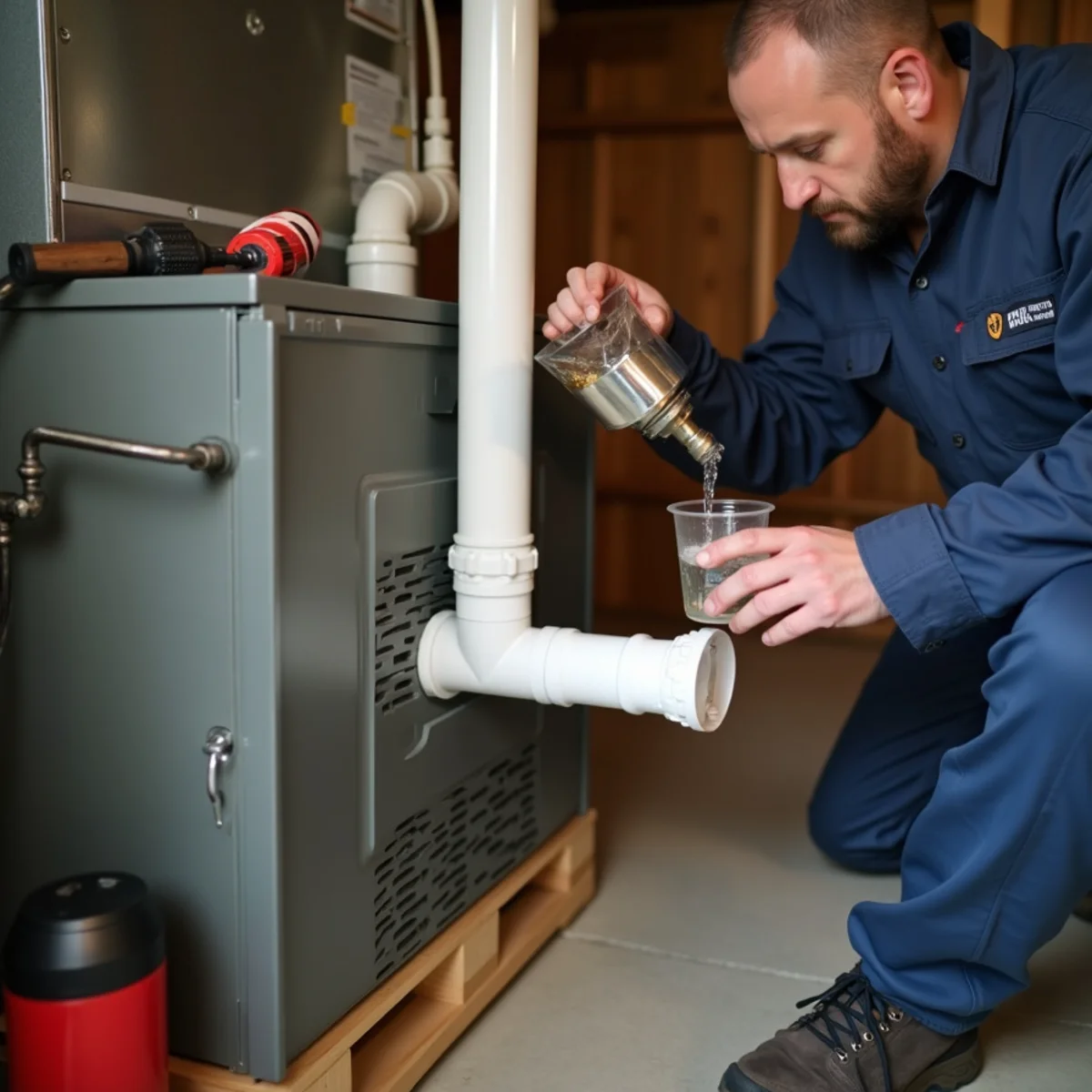
A homeowner can try a gentle fix. Many systems have a vertical access tee near the unit with a cap, and pouring a small amount of white vinegar in is commonly recommended to help clear light buildup. Many people also use a wet/dry vacuum at the outdoor end of the line to pull the clog out. Do not use harsh chemicals that could damage metal parts, and do not push wires or tools into a line you cannot see. If the water keeps coming back, the line needs to be cleared properly or repiped.
An Overflowing or Cracked Drain Pan
Over the years, a metal pan can rust through and a plastic one can crack. A pan that is no longer level can also spill over one side even with a clear drain. If you find rust flakes, stains running down from the pan, or water pooling around the cabinet instead of the drain, the pan may be the problem. A damaged pan is a replacement job, because patching a part that sits under a cold coil rarely lasts.
A Frozen Coil and a Dirty Filter
When airflow drops, the evaporator coil can get cold enough that moisture freezes on it instead of dripping. Ice builds up, the system struggles, and when it finally melts, the pan and drain cannot keep up. A dirty filter is the most common cause of reduced airflow, followed by blocked returns, a failing blower, and low refrigerant.
If you see ice on the indoor coil or the refrigerant line, switch the system to Off and set the fan to On to help it thaw. We walk through the process in air conditioner freezing up: why it happens and what to do, and our guide to how often to change HVAC filters helps you avoid it. Low refrigerant is a leak, and only an EPA-certified technician can find and repair it.
Float Switches and Condensate Pumps
Many installations have a float switch, a small safety device in the pan or drain line that cuts power to the AC when water rises too high. When it works, you get a system that stops cooling and a little water, instead of a flooded ceiling. If the AC suddenly will not run and there is water in the pan, a tripped switch may be the reason. Do not bypass it, because that removes the protection.
Where the drain cannot run downhill, such as in a finished basement, a small condensate pump moves the water. If the pump fails, tubing kinks, or the pump's own float sticks, the water backs up. Pumps are wear items, and a noisy or struggling one is worth replacing before it fails.
Installation Problems: Pitch, Traps and Attic Units
Drain lines have to slope downhill all the way out. Sags, flat sections, or a missing or poorly built trap can leave standing water in the line, and that grows algae quickly. The air handler itself also has to be set level or slightly tilted toward the drain so the pan empties.
Units installed in attics are higher risk, because a leak goes straight into the ceiling below. Look for a secondary drain pan under the unit and a second drain line or float switch. If your system does not have those, it is worth discussing during your next AC maintenance visit.
Safe Checks and When to Stop
Safe to do:
- Turn the system off at the thermostat
- Replace a dirty filter and look for ice
- Check the pan and drain for obvious blockage with the power off
- Clear the visible end of the drain line
- Pour a little vinegar into the access tee, then check the area daily for a week
Stop and call if the water keeps returning, if you see ice that does not clear, if the breaker trips, if there is any burning smell, or if water has reached electrical equipment. Do not remove electrical panels or touch wiring. If you smell gas or see smoke, leave the house and call 911.
Keep It From Happening Again
Change the filter on a regular schedule, keep the area around the unit clear, and have the drain line flushed and the pan checked as part of a spring tune-up. Our spring AC tune-up checklist lists what a good visit should cover.
If the leak is active and you are not sure where it is coming from, our AC repair technicians can trace the cause and fix it, and if the system is not cooling at all, emergency AC repair is available. Call (327) 210-5999. A cooling system that is also noisy, buzzing, or struggling is a clue too, so read our guide to what AC noises mean.