
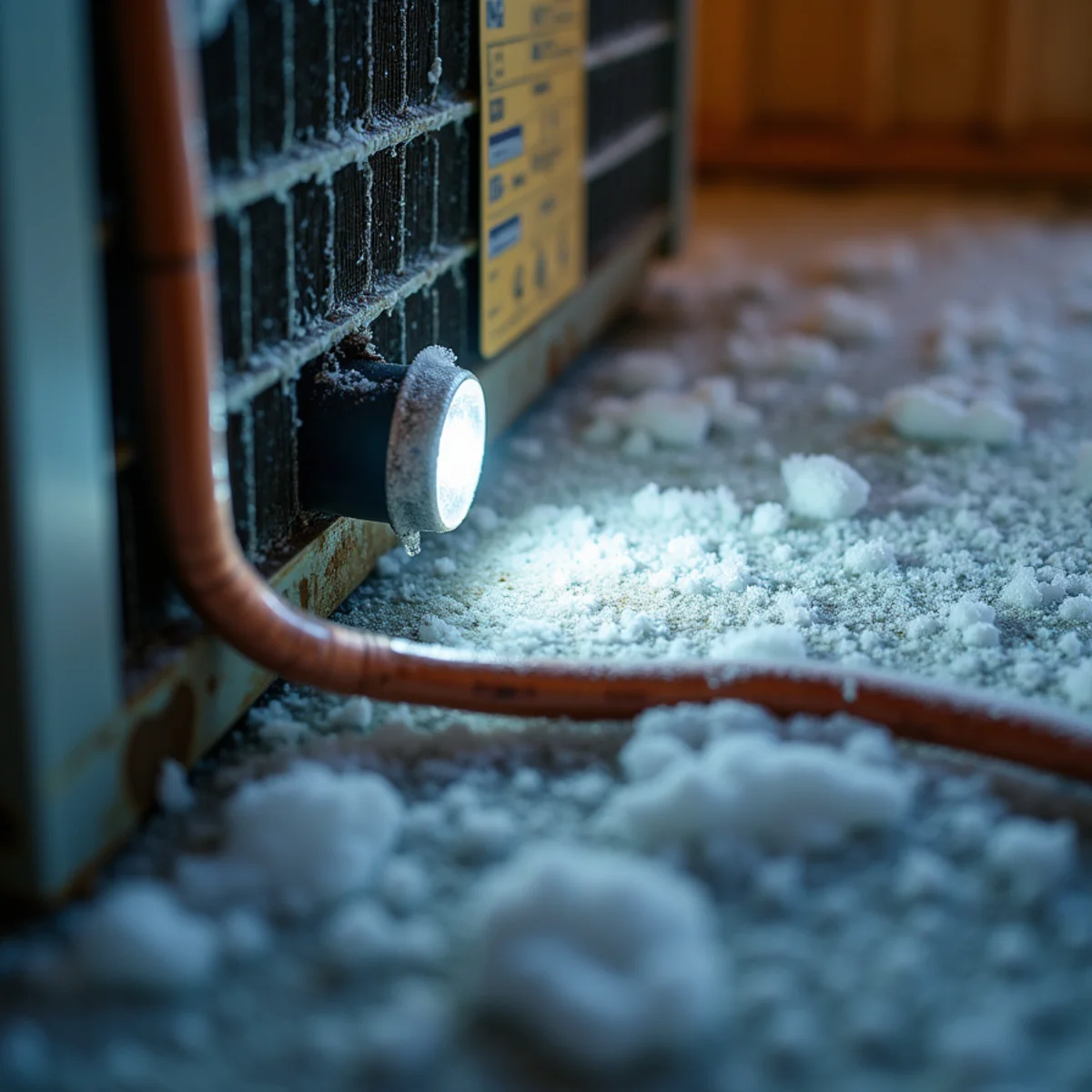
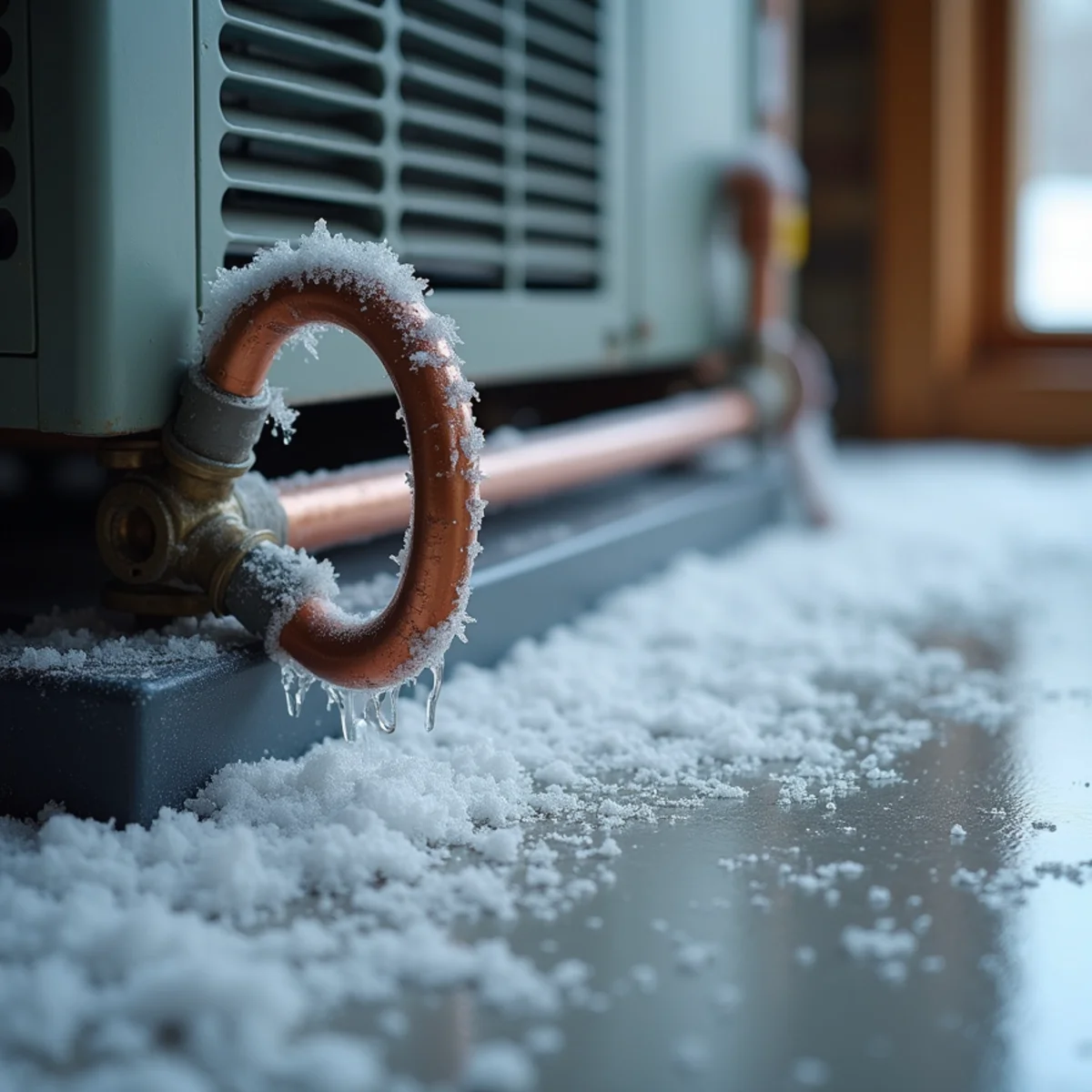
A frosted refrigerant line, a block of ice on the indoor coil, or an outdoor unit coated in frost on a humid July day all mean the same thing: some part of the system is getting colder than it should, and moisture from the air is freezing on it. The ice itself isn't the problem. It's evidence of one. Treating the ice without finding the cause means it will return.
What to Do Right Now
- Switch the thermostat from Cool to Off. Don't keep running the system while it's iced up, because running can damage the compressor.
- Set the fan to On. Circulating house air across the indoor coil helps it thaw faster than leaving everything off.
- Wait for the ice to melt completely, which can take several hours.
- Place towels or a container where water might overflow, since thawing ice produces more water than the drain pan expects.
- Check and replace the filter if it's dirty.
What Not to Do
Don't chip or scrape ice off the coil or lines, and don't pour hot water on it or use a heat gun. Coil fins and copper lines are easily punctured, and a refrigerant leak makes things much worse. Don't restart cooling until the unit has fully thawed and you've addressed the likely cause.
Why Air Conditioners Freeze
Cooling works by passing air over a very cold evaporator coil. Normally the coil stays just above freezing. If there is too little warm air moving across it, or too little refrigerant pressure, the coil temperature falls below freezing and condensation turns to ice. The usual causes:
- A clogged air filter
- Closed or blocked return and supply registers
- A dirty evaporator coil
- A failing or undersized blower motor
- Low refrigerant from a leak
- Ductwork problems such as collapsed or leaking return ducts
- Running the AC when outdoor temperatures are low, which can also cause icing
Humid weather increases the risk, because there's more moisture available to freeze. That's relevant around Lake Nockamixon and other humid parts of Upper Bucks County, as discussed in our article on humidity and your AC in Haycock Township.
How to Tell Airflow From Refrigerant Problems
If the filter is dirty and the coil thaws and stays clear after replacement, airflow was probably the cause. If the unit freezes again soon, or you also see weak cooling, hissing, or oily residue on refrigerant lines, suspect a refrigerant leak. A low charge isn't something that gets used up, so it always indicates a leak that has to be found and repaired.
Can It Cause Damage?
Yes. Running an iced-up system risks liquid refrigerant reaching the compressor, which is the most expensive component. Water from melting ice can also overflow the drain pan and damage ceilings, floors, or insulation. That's why we recommend shutting the system down promptly.
Preventing a Repeat
- Change the filter on schedule. See how often to change HVAC filters.
- Keep supply and return registers open and unblocked.
- Have the coil, drain, and refrigerant performance checked during a spring AC tune-up, which is also covered in our spring AC checklist.
When to Call
If the system freezes again after a new filter, if cooling is weak, or if you suspect a leak, schedule AC repair. If the system fails on a hot night with vulnerable people in the house, emergency AC repair is available. For a related but different symptom, see our guide on AC running but not cooling.