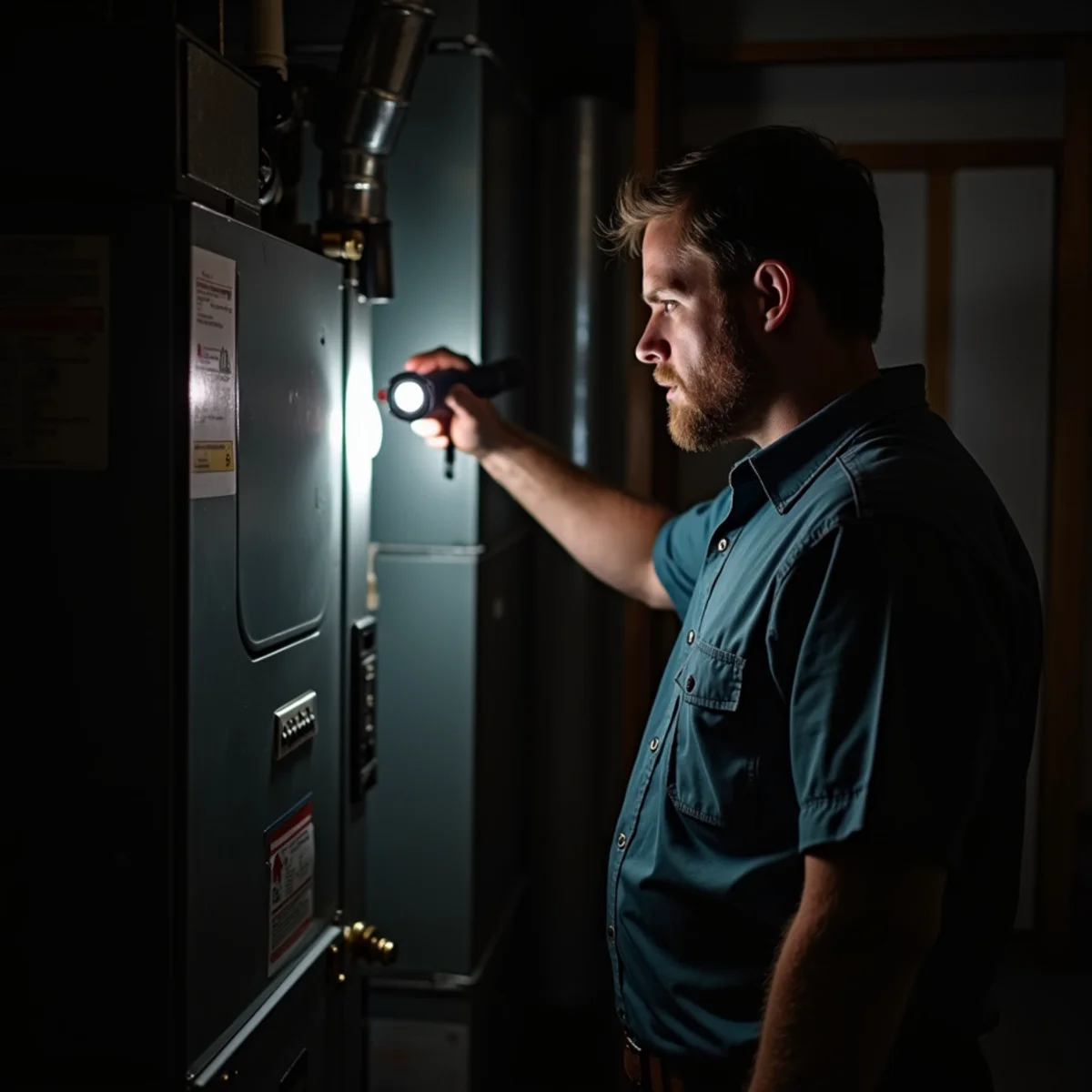
When a furnace does nothing at all, there is no sound, no click, no flame, and the house gets colder. The cause is usually one of a short list of things upstream of the furnace itself. Working through them in order costs a few minutes and tells you whether you need a technician or just a battery.
This guide is about a furnace that doesn't respond. If yours starts and then shuts off quickly, our guide to furnace short cycling is a better match. If the blower runs but the air is cold, see furnace blowing cold air.
Step 1: The Thermostat
Confirm it's set to Heat and the setpoint is several degrees above the room temperature. If the display is blank, replace the batteries. For wired thermostats, check whether the screen is dead, which can point to a tripped switch or a blown low-voltage fuse. Many programmable and smart thermostats also have a power-saving or hold mode that can leave you waiting for a scheduled change.
Step 2: Power to the Furnace
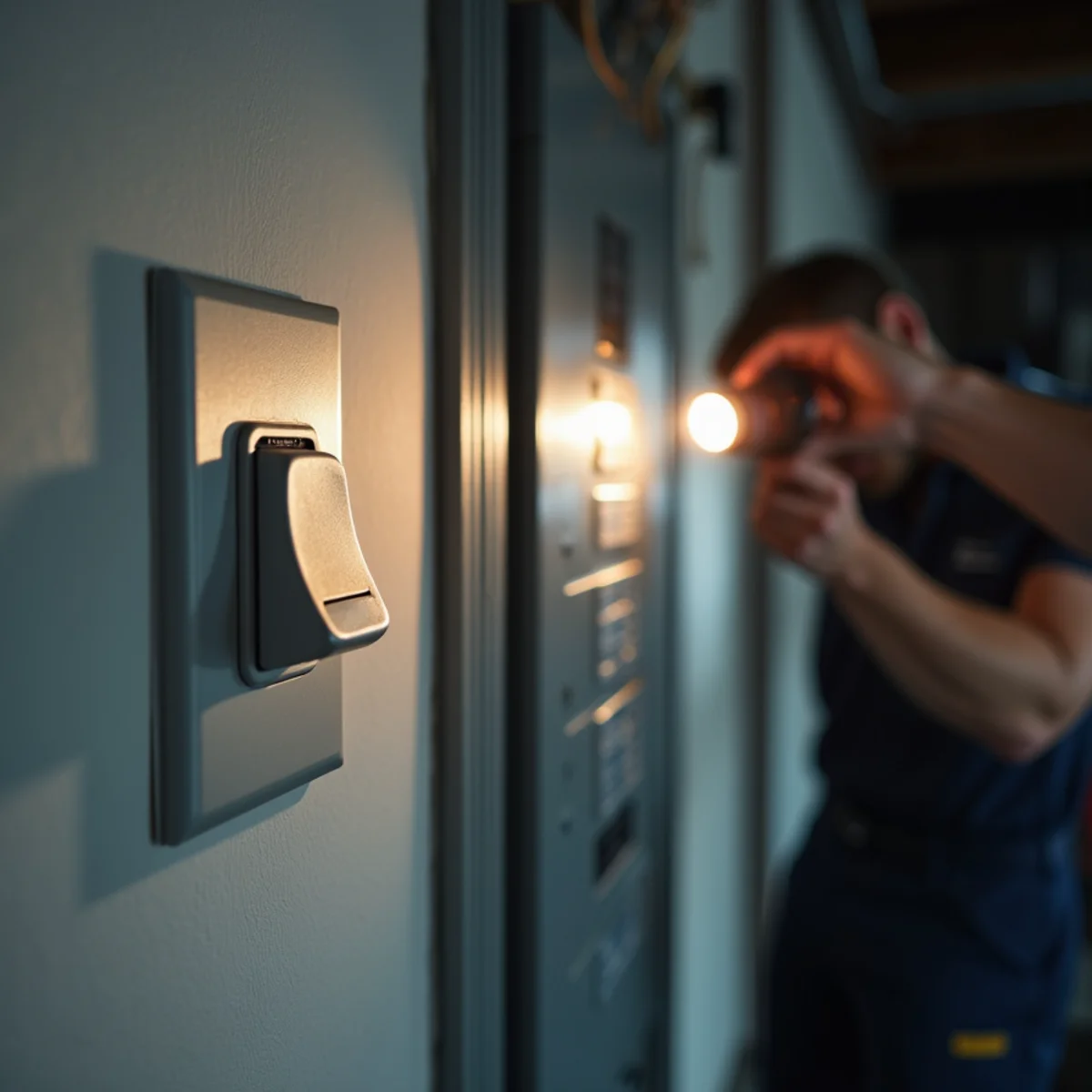
Furnaces have a switch near the unit that looks like a light switch, and it is often bumped or turned off during other work in the basement or closet. Check that it's on. Then check the breaker panel for a tripped breaker labeled for the furnace or air handler. One reset is reasonable. If it trips again, stop and call, because repeated trips mean an electrical fault.
Many furnaces also have a door switch that prevents operation when the front panel is not seated correctly. If you've recently changed the filter, make sure the panel is fully in place.
Step 3: The Filter and the Panel
A very clogged filter can cause a limit switch to shut the furnace down. Replace it if it's dirty. See how often to change HVAC filters if you're not sure.
Step 4: Fuel
- Natural gas: confirm other gas appliances such as the stove or water heater are working. If they aren't, the problem is upstream of the furnace.
- Oil: check the tank gauge. An empty tank, or a clogged oil filter, is a common cause. After running out of oil, a burner usually needs a technician to prime and restart it.
- Propane: check the tank level
Don't attempt to relight a pilot light, adjust a gas valve, or work on a gas line unless the manufacturer's instructions clearly direct a homeowner procedure. Many modern furnaces have no pilot and use an electronic igniter that can't be relit by hand.
Step 5: Condensate and Safety Switches
High-efficiency gas furnaces have condensate drains and float switches. If the drain is blocked, the switch stops the furnace. Water around the furnace is a sign of this. Don't clear it with the cabinet open and power on. Note it and call.
Step 6: Error Codes and Lights
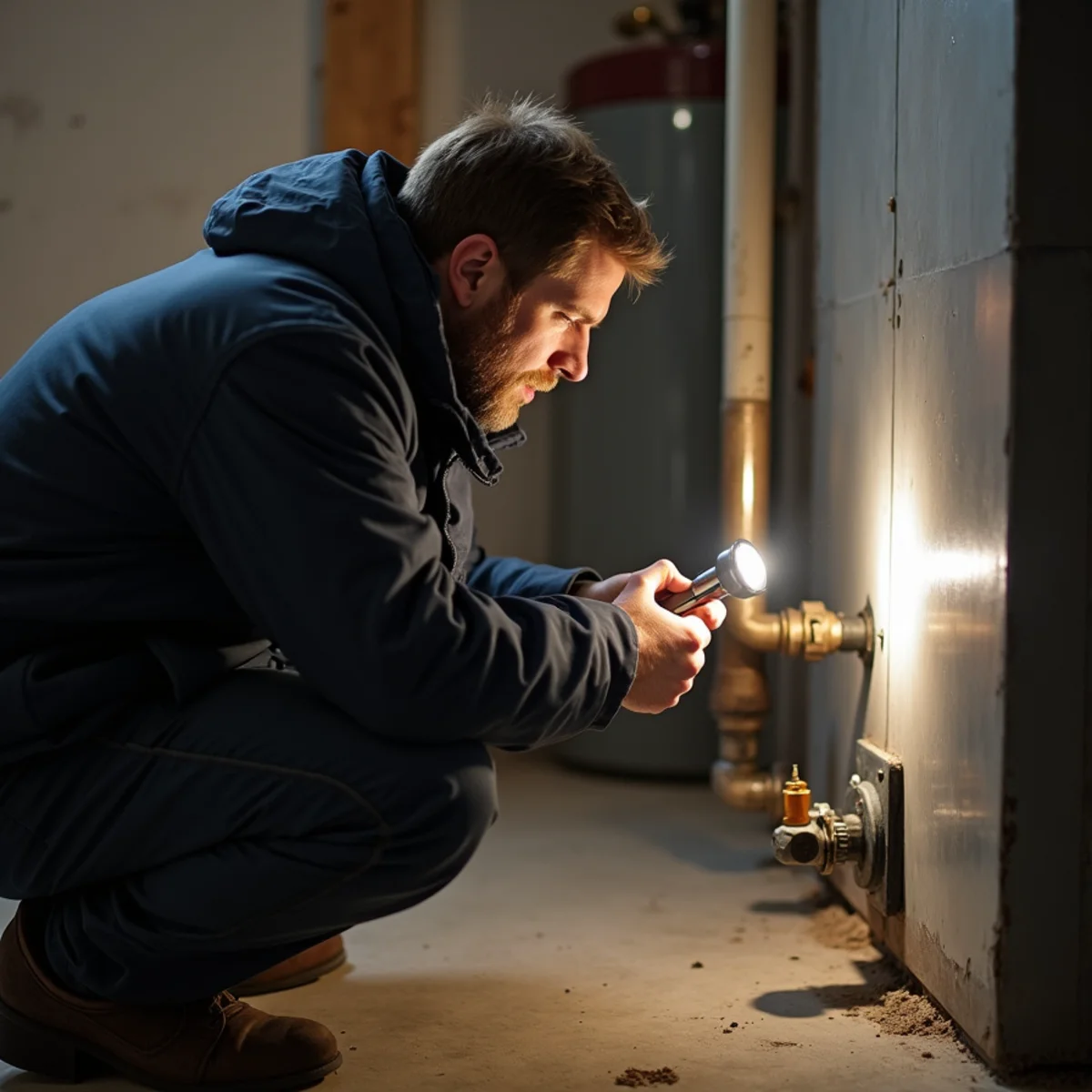
Many furnaces have a small window or panel showing a diagnostic light that flashes in a pattern. The pattern corresponds to a fault code listed on a label inside the door. Writing down the pattern or photographing it helps a technician bring the right part. Don't open sealed compartments.
What a Technician Looks At Next
If the checks above don't produce heat, the usual causes are a failed igniter, flame sensor, pressure switch, inducer motor, control board, or gas valve on a gas furnace, and a locked-out primary control or burner motor on an oil furnace. These require test equipment and are part of what furnace repair covers. For a no-heat situation in cold weather, see emergency furnace repair and our guide to what to do when your furnace quits at night.
Safety Reminder
If you smell gas, see smoke, or a carbon monoxide detector is sounding, don't troubleshoot. Get everyone out and call 911 or your gas utility from outside. Our carbon monoxide warning signs guide explains what to watch for.