
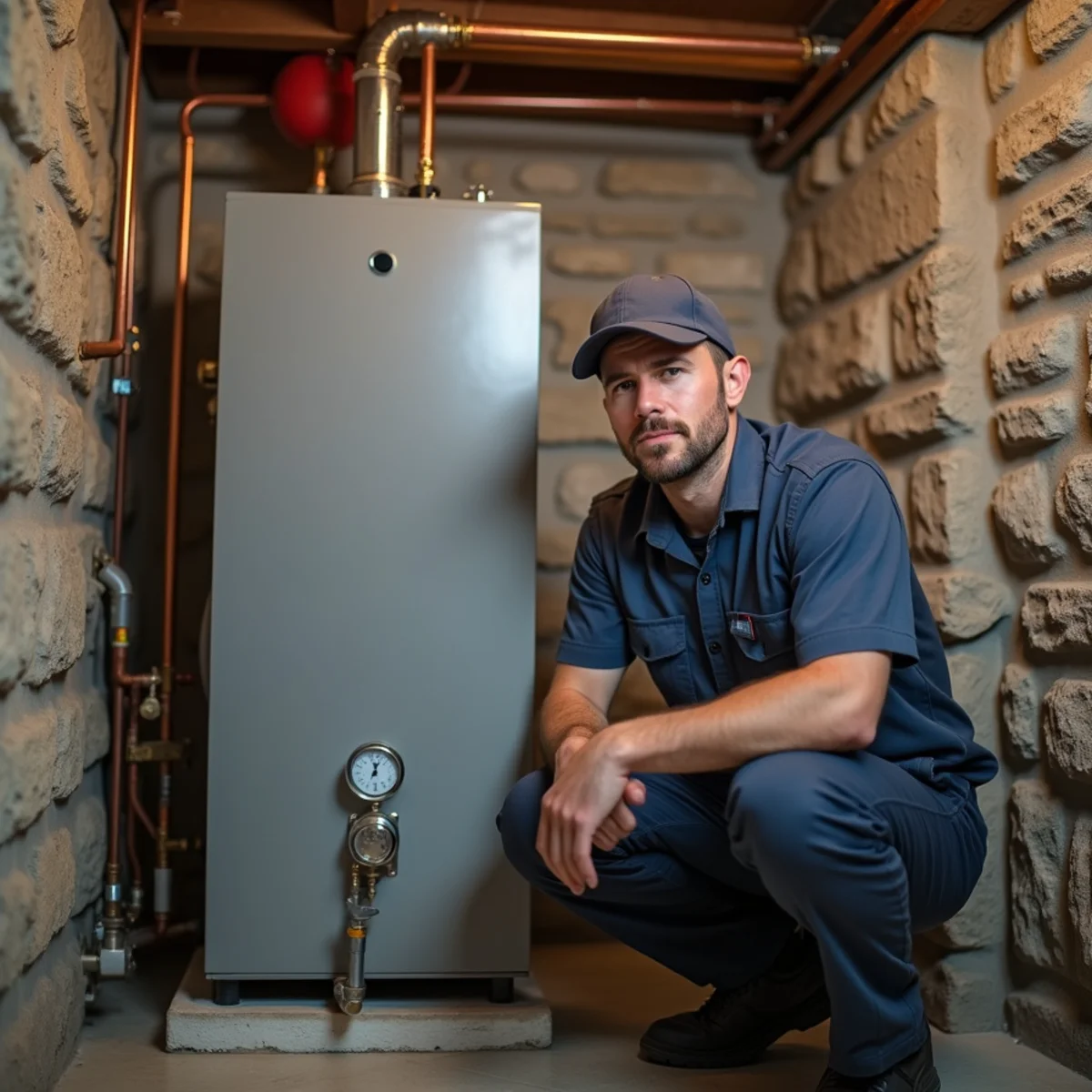
If you have a hot-water boiler, the round gauge on the front is the quickest way to tell whether the system is healthy. On most home systems the needle sits somewhere around 12 to 15 psi when the boiler is cold, then climbs a few psi as the water heats and expands. Pressure that sits near zero, or that climbs toward 30 psi, is telling you something is wrong. The right number for your boiler is on its label or in its manual, so check there first.
What a Normal Reading Looks Like
A hot-water heating system is a closed loop full of water. The boiler needs enough pressure to push water up to the highest radiator or baseboard in the house, and it needs a cushion of air in the expansion tank to absorb the extra volume as the water heats. When the system is cold, a reading of roughly 12 to 15 psi is commonly seen. When it is hot, it may rise by several psi and then fall back as it cools.
Most residential boilers have a pressure relief valve rated at 30 psi. That is the safety limit, not a target. If your needle regularly gets anywhere near it, something in the system has stopped doing its job.
Why Boiler Pressure Drops Too Low
Low pressure means water is missing from the system or the system is not refilling itself. The common causes are:
- A small leak at a radiator valve, a pipe joint, a circulator pump flange or the boiler itself
- A relief valve that has weeped and let water out
- Air bled out of radiators without the system refilling afterward
- A failed automatic fill valve, or one that was shut off
- An expansion tank that has lost its air charge or has a failed bladder
Older brick and stone homes around Quakertown often have long piping runs through basements and crawlspaces, and a slow drip at a pipe joint can go unnoticed for months. If the gauge keeps falling after you or a technician has added water, there is a leak somewhere. Adding water again and again just hides it, and fresh water brings in oxygen that speeds up corrosion inside the boiler.
If radiators are cool upstairs but warm downstairs, low pressure may be why, since the water cannot reach the top floor. Our guide on how to bleed a hot-water radiator explains the right way to remove trapped air and why the pressure should be checked afterward.
Why Boiler Pressure Climbs Too High
High pressure is the more urgent of the two, because the relief valve is the only thing standing between the system and its limit. The usual causes are:
- A waterlogged expansion tank that no longer has an air cushion, so the pressure spikes every time the water heats
- An automatic fill valve that is stuck open and keeps feeding water in
- Someone manually overfilling the system
A quick test a technician uses: note the pressure cold, then watch it as the boiler heats. If it jumps well past the normal range within a short time, the expansion tank is the first suspect. A water heater tank and a heating expansion tank are different parts, so don't mix up the two when you are talking with a plumber or technician.
If the Relief Valve Is Dripping
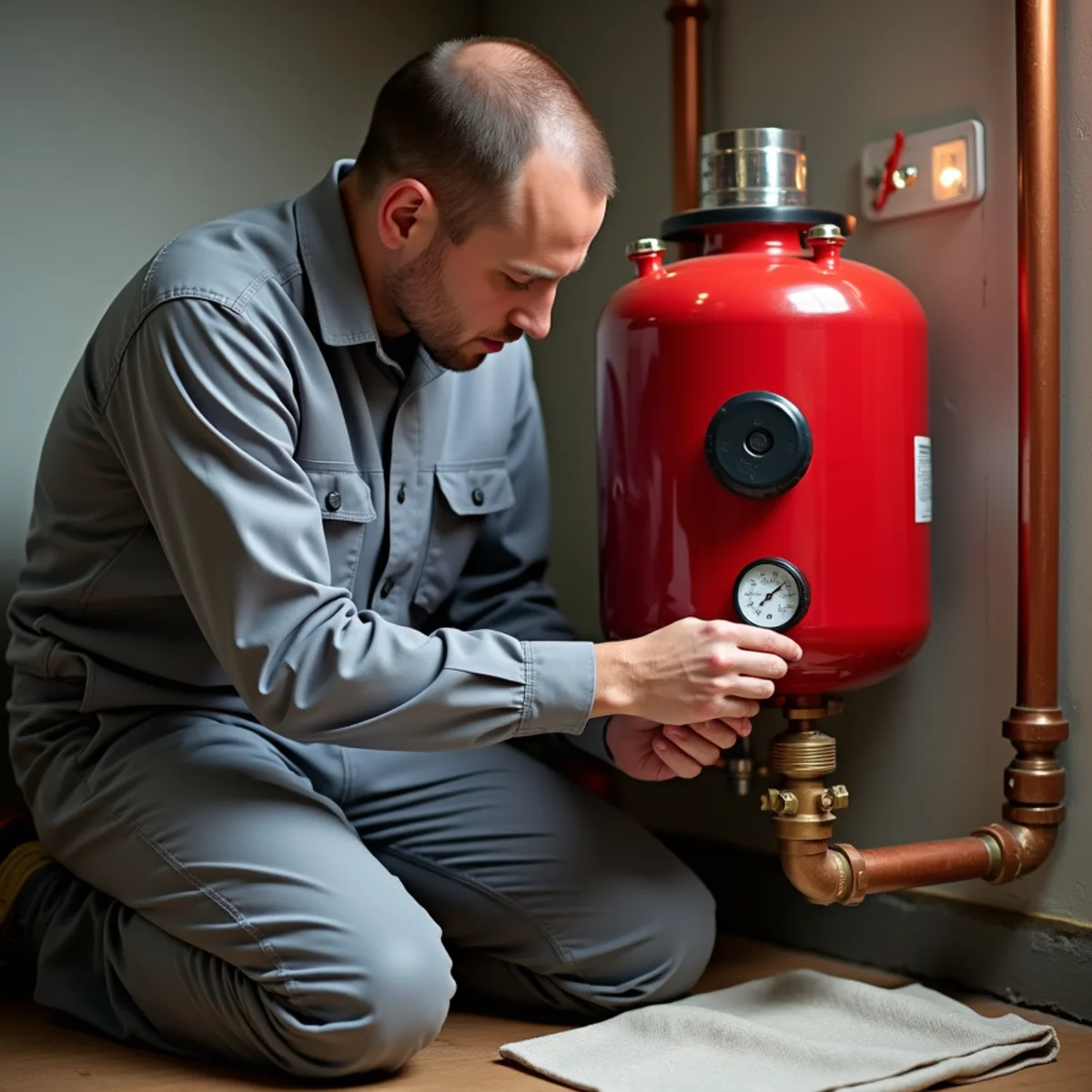
A weeping relief valve is usually the result of high pressure, not the cause of it. Do not cap it, plug it, or crank on the lever to "seat" it, and never adjust it. The valve is a safety device and it has to be able to open. A valve that has lifted several times can also fail to reseat properly and continue to drip even after the pressure problem is fixed, so it often needs replacing along with the root-cause repair.
Hot water coming out of the discharge pipe can scald. Keep children and pets away from the pipe outlet, and do not stand in front of it.
Steam Boilers Are Different
If your home has a steam boiler, the gauge is not showing the same numbers. Residential steam systems operate at very low pressure, commonly a couple of psi or less, and the gauge on a steam boiler is often a compound or low-range type. A reading of 12 psi on a steam boiler is not normal. Steam systems also depend on the water level in the sight glass, which is a separate check. Our article on steam versus hot-water boilers will help you work out which type you have, and our guide to boiler noises covers the sounds that often come with water-level and pressure problems.
What You Can Safely Check Yourself
You can look and note things without touching anything that matters:
- Read the gauge cold and write it down, then read it again when the system is hot
- Check the boiler label for its rated operating pressure
- Look for water on the floor, rust stains, or drips at pipe joints and the relief valve discharge
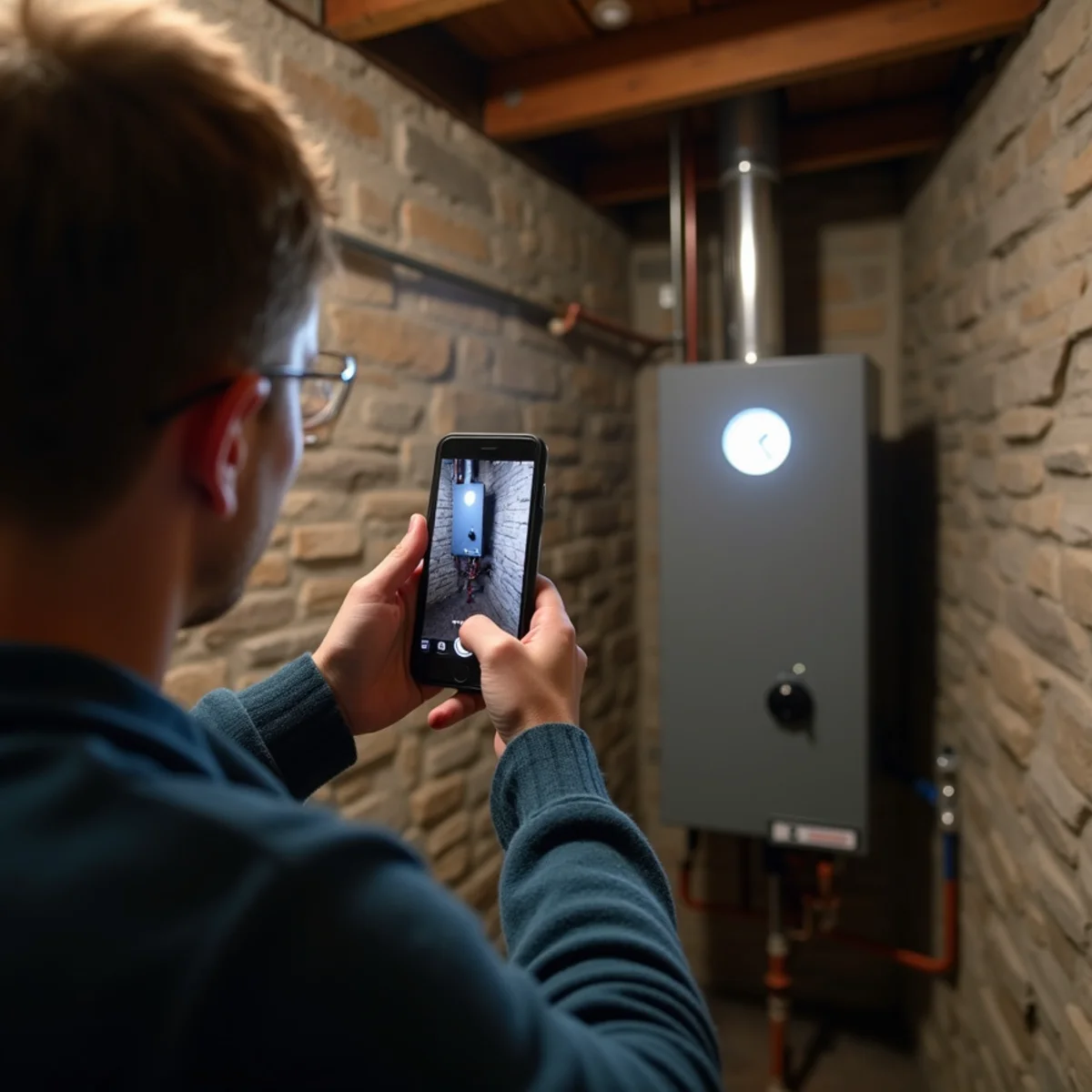
- Take a photo of the gauge for your technician
- Confirm that the boiler switch and the thermostat are working
Adding water to a hot-water boiler through the fill valve is something some manufacturers' manuals describe for homeowners, but only follow those exact steps for your model, with the boiler cooled down, and stop at the pressure on the label. Do not touch the relief valve, do not drain the system, and do not work on gas, oil or electrical components. Boilers that burn gas or oil can also produce carbon monoxide if something goes wrong, so keep working detectors nearby. Our guide to carbon monoxide detector placement and testing covers where they should go. If you smell gas or a CO alarm sounds, leave the house and call 911.
When to Call a Professional
Call for service if the pressure will not hold steady, if it keeps climbing toward the relief valve, if the valve is weeping, if you see water leaking from the boiler, or if there is no heat and the gauge reads zero. Scalding water or steam coming from any discharge pipe is an emergency; shut the boiler off at its switch if you can reach it safely and call right away.
Our technicians handle boiler repair for both steam and hot-water systems, and the same visit often covers heating repair problems like circulator and zone issues. If the boiler is old, leaking internally, or repeatedly losing pressure, the honest conversation is about repair versus boiler installation. Our boiler replacement cost guide walks through that decision, and for after-hours trouble use our emergency HVAC repair line.